Schools In Focus: Expert Advice on COVID-19 Cleaning

Schools In Focus is a Spaces4Learning podcast dedicated to K-12 school design, planning, and management. Each episode will feature a conversation with industry experts, facility managers, architects, and thought leaders on topics related to school facilities. Catch up on previous episodes here.

Today's episode is about cleaning and disinfecting school facilities.

Schools In Focus, Episode 3: Expert Advice on COVID-19 Cleaning
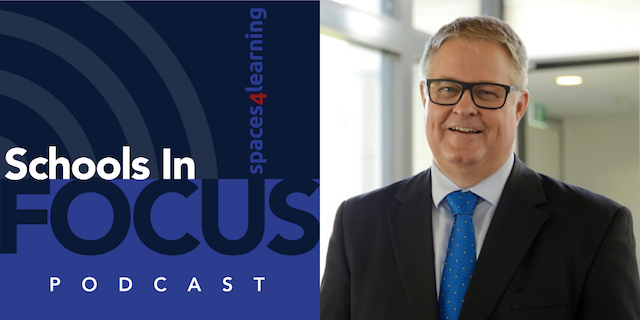
Schools In Focus podcast logo and Dr. Greg Whiteley

The world looks very different now since the last episode. Schools across the country are closed to prevent the spread of COVID-19. At the time of publication, 24 states have decided to keep schools closed for the remainder of the school year. According to the New York Times database, at least 606,800 people in the United States have tested positive for the virus and at least 25,922 have died from it.

In this episode, we talk about the short-term and long-term goals of keeping school facilities clean amidst the COVID-19 pandemic. I spoke to Dr. Greg Whiteley, a specialist in cleaning science, hygiene and disinfection. He’s the chairman of the Whiteley Corporation, a medical and industrial cleaning company based in Australia. He’s also an adjunct research fellow in the School of Medicine at Western Sydney University and a board member of the Cleaning Industry Research Institute.

Dr. Whiteley describes how the virus works, how it affects children, outlines cleaning goals for schools within the next year, and provides practical advice for custodial workers. 

Where to Listen

Schools In Focus is available on Apple Podcasts, Google Play, and Stitcher. Subscribe today, or listen below! Stay tuned for more episodes!

About the Author

Yvonne Marquez is senior editor of Spaces4Learning. She can be reached at [email protected].

Featured

  • Rethinking K-12 Schools as a Continuous Learning Experience

    Most students move through three or more separate facilities during their K-12 journey, yet the built environments they encounter at each stage have traditionally been designed in isolation, with little continuity in spatial language, learning philosophy, or physical resources. Each new school is a reset with different layouts, learning models, expectations, and ways of moving through a building. The next generation of school design is making the case that the first day of kindergarten and the last day of high school can and should feel connected through common support systems and infrastructure in the physical environment.

  • Spaces4Learning Announces 2026 Product Award Winners

    Spaces4Learning has just announced the winners of the 2026 Product Awards! The award program spotlights outstanding product development achievements of manufacturers and suppliers whose products or services are considered to be particularly noteworthy in their ability to enhance K–12 and higher-education learning environments.

  • Wold Completes Geothermal Projects at Two Minnesota Schools

    Wold Architects & Engineers recently announced that it has completed two geothermal expansion projects for Mounds View Public Schools in Shoreview, Minn., according to a news release. The work at Highview Middle School and Irondale High School serves the district’s long-term goal of reducing energy costs and dependency on non-renewable fuel sources, as well as improving building performance.

  • Cal Poly Humboldt Starts Construction on Healthcare Education Hub

    California State Polytechnic University, Humboldt in Arcata, Calif., recently announced that work has begun on a renovation project that will turn the Stewart Building into a new Healthcare Education Hub, according to a news release. The university is partnering with Sundt Construction Inc. for construction services.