"Viral Barrier" Provides Physical Distancing Shield

A U.S.-based company has launched a new line of mobile panels meant to provide shields for people. "ViralBarrier" from Precise Tooling Solutions is intended specifically for K-12 and higher education use.
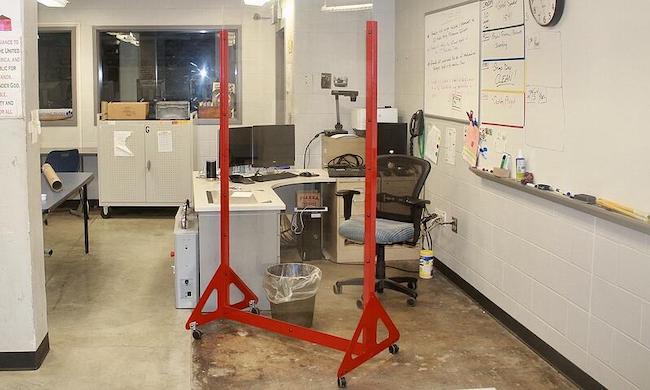
"ViralBarrier" from Precise Tooling Solutions is intended specifically for K-12 and higher education use.

According to the company, the new product features:

  • Shatterproof clear quarter-inch-thick polycarbonate material that can be "easily sanitized";
  • Hooded swivel-casters with brakes;
  • Delivery fully assembled; and
  • An optional mid-level shelf for lightweight digital devices and instructional aids.

The shield is built on a steel truss with an aluminum frame. It's available in a vertical or horizonal orientation and with a choice of "hundreds of colors." The size of the shield is 78 inches by 42 inches.

Production time is estimated to be 18 to 20 days once a purchase order has been submitted.

About the Author

Dian Schaffhauser is a former senior contributing editor for 1105 Media's education publications THE Journal, Campus Technology and Spaces4Learning.

Featured

  • Abstract tech network data connections with orange, blue glowing dots, lines

    3 Trends for Higher Education to Stay Ahead of in 2026

    As universities enter the new year, the question is no longer whether digital transformation is necessary, but how quickly institutions can convert technological potential into strategic advantage.

  • Photo credit: Elkus Manfredi Architects

    University of Virginia Selects Design-Build Team for New Residential Complex

    The University of Virginia in Charlottesville, Va., recently announced that it has selected a design-build team for a new upper-class residential development on campus, according to a news release. Capstone Development Partners—in partnership with Elkus Manfredi Architects and the Hoar Construction/Hourigan construction team—will move forward with the three-building, 310,000-square-foot housing facility.

  • Pitzer College

    Designing for Change in Higher Ed Learning Environments

    Higher education will continue to evolve, and learning environments must evolve with it. By prioritizing adaptable infrastructure, thoughtful reuse, strong energy performance, and wellness-centered design, campuses can create spaces that support learning today while remaining flexible for the future.

  • Different Starting Points, Same End Goal

    Higher education campuses can enhance student experience by implementing mobile credentials to streamline building access, on-campus payments, and access to other amenities. This enables students to connect to their campuses through the technology they use most: their mobile devices.