New Mexico State University Solar Project Begins Construction

Construction of a new solar project at New Mexico State University began this week. The university has partnered with El Paso Electric (EPE) on the initiative that they call Aggie Power, which should be sufficient to power about one-third of the 900-acre NMSU campus in Las Cruces. They expect to complete the construction by this fall, and the project has been in the works since 2018. The goal of the partnership is to move forward on “mutual goals related to state renewable energy, climate action, and micro-grid development.”

Aggie Power is intended to not only provide the university with a source of renewable energy, but also to act as a “living laboratory” that offers training and research initiatives for electrical engineering faculty and students. Another benefit is that it will give the university a power boost between noon and early evening, when the demand for power is greatest.
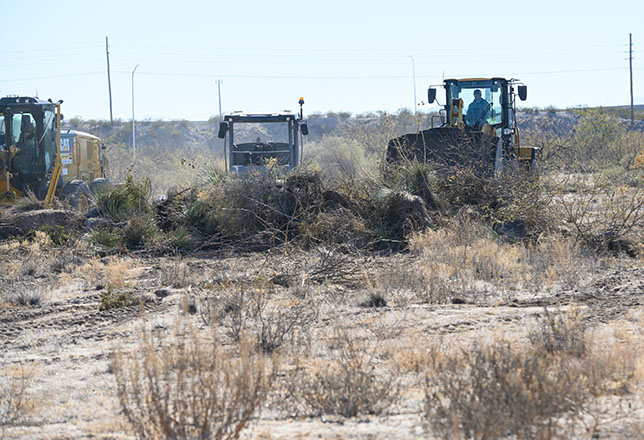
New Mexico State University solar project construction
Source: New Mexico State University

“If we can receive solar power at that optimal time,” said Pat Chavez, director of Utilities and Plant Operations, “it means Aggie Power will allow NMSU to lower the need for energy during the time in which energy costs are at their highest and rely less on power from conventional, natural-gas-powered energy.”

Construction is taking place across 29 acres of the university-owned Arrowhead Park. The terms of the partnership dictate that EPE will own, run, maintain, and take ultimate responsibility for the process. The three-megawatt solar photovoltaic project also includes single-access tracking solar panels and a single-megawatt battery pack from Tesla.

When finished, Aggie Power will be the largest of three renewable-energy sources on campus. Chavez expects the project to provide the university with more flexibility regarding energy sources and managing utility rates.

About the Author

Matt Jones is senior editor of Spaces4Learning. He can be reached at [email protected].

Featured

  • Rethinking K-12 Schools as a Continuous Learning Experience

    Most students move through three or more separate facilities during their K-12 journey, yet the built environments they encounter at each stage have traditionally been designed in isolation, with little continuity in spatial language, learning philosophy, or physical resources. Each new school is a reset with different layouts, learning models, expectations, and ways of moving through a building. The next generation of school design is making the case that the first day of kindergarten and the last day of high school can and should feel connected through common support systems and infrastructure in the physical environment.

  • Planning with Clarity: Using AI to Make Better Campus Decisions, Not Just Better Designs

    Higher education leaders are being asked to make increasingly high-stakes decisions about campus facilities amid greater uncertainty than ever before. Social and economic pressures, shifting enrollment, and evolving learning models compete with growing deferred maintenance needs to strain even the most robust infrastructure budgets.

  • Virginia Tech Tops Out New College of Engineering Building

    Virginia Tech in Blacksburg, Va., recently celebrated the topping out of Mitchell Hall, which will soon stand as the largest College of Engineering building on campus, according to a news release. The university partnered with Skanska on the 285,500-square-foot facility, which has an expected completion date of winter 2028.

  • Children walking along bright school corridor with motion blur

    How Next-Gen Design Is Reshaping the Student Experience

    The environments where students learn play a crucial role in shaping their growth in and out of the classroom. By centering design on well-being, flexibility, and purpose, districts can ensure their facilities remain vibrant community assets for many years to come.