California District Installs 1,500 Carrier OptiClean Air Scrubbers
The Manteca Unified School District in Manteca, Calif., has installed 1,500 Carrier OptiClean Dual-Mode Air Scrubber & Negative Air Machines across 30 schools in preparation to fully reopen. The product, which was named one of TIME’s 100 Best Inventions of 2020, will help improve the Indoor Air Quality (IAQ) for the more than 27,000 returning MUSD students, faculty, and staff.
“We’ve spent the last several months analyzing every facet of our organization in order to develop a comprehensive strategy designed to create a healthier environment for our students and staff,” said MUSD Superintendent Dr. Clark Burke. “The air quality in our area is often affected by the extensive local agriculture industry, and lately, regional wildfires have also contributed to poor air quality. After reviewing a number of indoor air quality solutions available, we are confident that the OptiClean product is the right fit for our needs. By placing an OptiClean unit in each classroom, we feel that we’ll not only help improve our IAQ, but also provide peace of mind to our students, their parents and staff.”
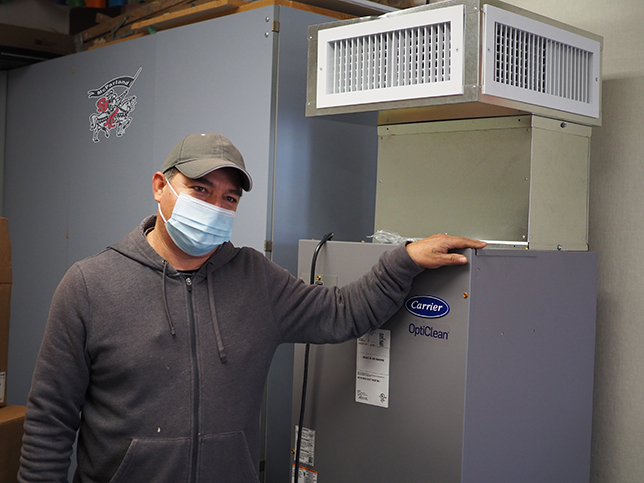
The OptiClean Dual-Mode Air Scrubber & Negative Air Machine was put into development in early 2020 at the onset of the COVID-19 pandemic for use in infectious isolation rooms in hospitals. It pulls in air, scrubs it with a HEPA filter, and blows it back out, reducing ambient contaminants in the surrounding area. The product plugs into a standard wall outlet and takes up less than 3 square feet of floor space.
Other California School districts, including the San Bernardino City Unified School District and the Alvord Unified School District, similarly selected the OptiClean product as their air quality solution during preparations to return to in-person learning. The districts recently purchased a combined total of 5,200 units to serve a total of 80,000 students, teachers, and staff.
“Schools and school districts continue to evaluate the IAQ of their facilities and what can be done to help improve those environments for their students and staff,” said Carrier President, NA Residential & Light Commercial, Justin Keppy. “We’re pleased to be working with Manteca Unified School District by providing one part of the solution for healthier and safer indoor environments. Our OptiClean units can help reduce contaminants in classroom air and inspire confidence for parents, students, teachers and staff as school districts safely return to in-person learning.”
About the Author
Matt Jones is senior editor of Spaces4Learning. He can be reached at [email protected].