Colorado State Student Project Adds 114-Megawatt Solar Array
- By Dian Schaffhauser
- 03/29/21
A student-driven initiative at Colorado State University has added almost 114 megawatt hours of clean electricity to the Fort Collins-based university's annual solar generation. The purchase of an 80-kilowatt, $100,000 photovoltaic solar array was funded almost entirely by student fees allocated through the Associated Students of Colorado State University (ASCSU), beginning in 2019. Recently, the university announced a deal that would double solar usage on the campus and help it towards a goal of shifting all energy needs to renewable energy by 2030.
The final project undertaken by students ended up being four times larger than the initial plan due to falling prices for PV, funding supplements provided by the Lory Student Center (on whose roof the panels reside) and Facilities Management, as well as incentives from a solar rebate program sponsored by the City of Fort Collins.
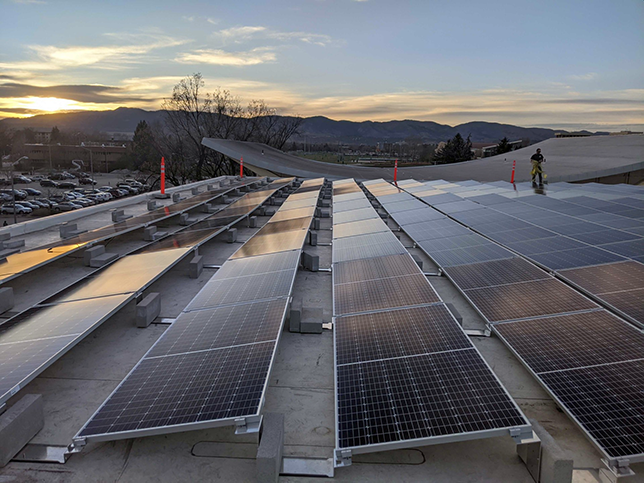
Colorado State University's Lory Student Center is the site of a new student-funded solar array.
Photo courtesy of Drew Halpern, EnergyLink
The Lory Student Center solar installation was finished last December.
"This is a tangible reflection of students' commitment to sustainability, truly a reflection of their values," said Mike Ellis, assistant vice president for student affairs and executive director of the LSC, in a campus article about the project. "The LSC is fortunate to be the beneficiary of their commitment to clean energy."
"This is a different way of investing in the building that (students) can be really proud of. It literally pays back and saves future students money," added Stacey Baumgarn, campus energy coordinator with Facilities Management. "In that way, the spirit and intent are really awesome."
Baumgarn leads green walking tours on campus and had been floating the idea of crowdfunding a smaller solar array at the student center for almost a decade. Two ASCSU senators—Rachael Dines and Daria Kramer—who joined one of his tours in 2018, reached out to him with the idea of writing a bill to secure funding. Although they graduated before the bill was passed, other students stepped in to see the project through to completion.
"They were the ones who had to stand in front of the Senate and fight for this. I get excited about how they kept the focus," Baumgarn said. "I'm proud of the students who hung in there."
"Students here really have a passion for sustainability, and I don't think we would be a leader in global campus sustainability if it weren't for that dedication," said Sophia Shepp, director of environmental affairs for ASCSU. "ASCSU is honored to have supported this project through its completion, and I look forward to seeing what we accomplish next."
About the Author
Dian Schaffhauser is a former senior contributing editor for 1105 Media's education publications THE Journal, Campus Technology and Spaces4Learning.