Private LTE Network Delivers Student Connectivity in Ill. District
- By Dian Schaffhauser
- 04/14/21
An Illinois district has installed a $300,000 private LTE network to deliver internet connectivity to students. Collinsville Community Unit School District #10 worked with IT solutions provider STEPcg to address the needs of about 500 students in the area. The district used CARES stimulus funding to build the network, which uses technology from Nokia and Cambium Networks.
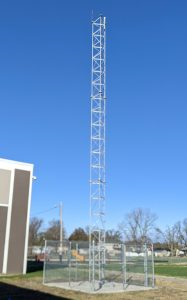
The centerpiece of the network is an LTE broadband tower which ties into the district's internet service, constructed at Kreitner Elementary School. The network consists of four Nokia Citizens Broadband Radio Service (CBRS) microcell installations that provide about four square miles of cellular wireless coverage in the communities of Fairmont City and State Park.
The school system had considered other options, including mobile hotspots, routers on school buses, routers on telephone poles and paying for internet providers to install service in affected areas.
According to district Director of Technology Derek Turner, he'd begun asking about private LTE in early 2020, when the Federal Communications Commission had approved its use by cities, schools and companies. "I was put in touch with STEPcg, [which] helped me understand the ins and outs of private LTE and put together a bold plan to conquer the connectivity gap in our community," Turner recalled, in a district article about the project. By August 2020 STEPcg had constructed a temporary solution and conducted testing. In September plans were reworked to provide greater coverage and more reliability. Construction was done on a broadcast tower, followed by microcell installations at four locations in the coverage area. Installation and testing were finished in February 2021, and the network went "live" in March.
"The pandemic heightened the fact not all of our students had connectivity and exposed the need to ensure all students had equal access whether at home or at school," noted Superintendent Mark Skertich. "Internet connectivity ensures all students are able to complete assignments, conduct research, interact with classmates and teachers, apply for scholarships, seek employment and participate in everyday occurrences as simple as seeking the answer to a random question. The need and rationale were easy. The 'how' took some time."
"Our fiber WAN project connects all of the schools and buildings throughout our district and provides internet access to all students while they are at school, but not all students have internet access when they are at home," added Board of Education President Gary Peccola. "With the construction of this LTE broadband tower, we are taking another step forward to meet the connectivity needs of students in the State Park and Fairmont City areas."
About the Author
Dian Schaffhauser is a former senior contributing editor for 1105 Media's education publications THE Journal, Campus Technology and Spaces4Learning.