Midwestern State to Update Science Building with Texas Funding

A Texas university has received nearly $45 million for capital projects from the state. Midwestern State University will use its allocation to update a science building and do infrastructure upgrades across the campus.

Bolin Science Hall will be the recipient of most of the funding. Built in the 1960s, the structure underwent a partial update in 1997. The latest renovation will modernize lecture halls, teaching and research laboratories, conference rooms and offices, including adding technology enhancements and life-safety improvements.
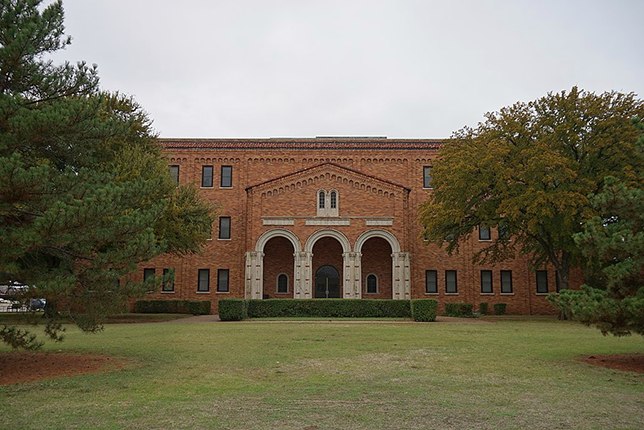
Bolin Hall at Midwestern State University

"Over the past 20 years, our spaces in Bolin Science Hall have become some of the most utilized on campus," said Marcy Brown Marsden, dean of the McCoy College of Science, Mathematics & Engineering, in a statement. "This promise of a Bolin Hall transformation will allow us the needed spaces and resources to recruit students to MSU Texas and significantly enhance our ability to offer a modern facility for students to learn, conduct research and collaborate."

The MSU funding was part of a $3.3 billion bond allocation recently approved by the Texas legislature, which is sending millions to the University of Texas and Texas state university institutions, covering construction and updates to research buildings, health facilities and other projects. MSU has also received a $5 million pledge from the Texas-based McCoy Foundation to finish its Bolin Science Hall work.

About the Author

Dian Schaffhauser is a former senior contributing editor for 1105 Media's education publications THE Journal, Campus Technology and Spaces4Learning.

Featured

  • University of Tennessee at Chattanooga Launches New Emergency Communications System

    The University of Tennessee at Chattanooga (UTC) recently deployed a new emergency notification and incident management system for its campus, according to a news release. The university partnered with 911Cellular to launch Safe@UTC, a smartphone app allowing university officials to communicate and respond during emergency situations.

  • Spaces4Learning Trends & Predictions for Educational Facilities in 2026: Part II

    As education leaders look toward 2026, the design of K–12 and higher education facilities is being reshaped by powerful, converging forces. Survey respondents point to the rapid growth of Career and Technical Education, deeper alignment with workforce and industry needs, and the accelerating influence of AI and emerging technologies.

  • University of Arizona Approves New Residence Hall

    The Arizona Board of Regents recently approved plans for a new residence hall at the University of Arizona in Tucson, Ariz., according to a news release. The new facility is scheduled to open in fall 2028 and have the capacity for more than 1,200 students, enforcing a new university expectation that all first-year students live on campus.

  • How a Portable Sink Helped an Art Classroom Run More Smoothly

    Classroom design decisions can have outsized effects on instructional time and safety at schools juggling mismatched infrastructure, strict budgets, and crowded schedules — particularly in the arts. Between spilled paint and dirty brushes, art classes run smoother with a sink in the studio. But many schools don’t have a sink in every art classroom.