Construction Complete on $6.1M Early Childhood Center

Construction management firm Kraus-Anderson recently announced that it has completed construction on the Early Childhood Center for Pine Island Schools in Pine Island, Minn. The facility stands two stories, covers 20,356 square feet, and cost $6.1 million, according to a news release.

The space includes amenities like new classrooms and a 2,000-square-foot multipurpose area. It also includes an outdoor playground, an indoor playground, administrative space, and ADA accommodations including an elevator. The building also serves as a storm shelter for the safety of students, teachers, and staff.
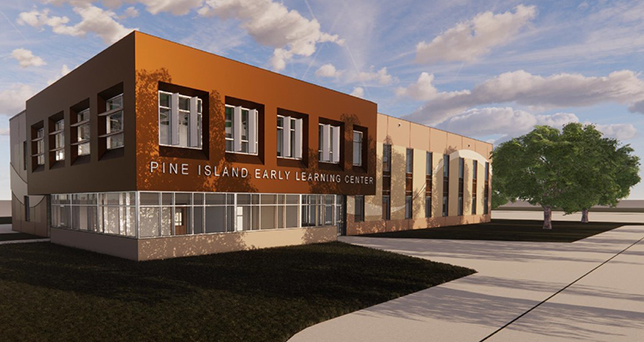
Pine Island Early Childhood Center
Photo Courtesy of Kraus-Anderson

The facility was designed by Wendel Architects.

The news release also reports that over the last five years, Kraus-Anderson has completed more than $1 billion in K–12 projects, ranking 20th in the country in the construction of K–12 facilities.

About the Author

Matt Jones is senior editor of Spaces4Learning. He can be reached at [email protected].

Featured

  • LAN, Inc. Opens Office in College Station, Texas

    Lockwood, Andrews & Newnam, Inc. (LAN) recently announced the opening of a new office in College Station, Texas, to support its regional client base, according to a news release. The organization provides engineering, design, and program management services for water, wastewater, transportation, stormwater, and education clients in the Brazos Valley.

  • Kimball International Releases Curated Design Support Program

    Commercial furnishings company Kimball International recently announced the launch of a new end-to-end design support program, DesignSuite. According to a news release, its goal is to guide architecture & design professionals and dealer partners through the process from vision to specification.

  • Geometric abstract school illustration

    How Design Shapes Learning and Success

    Can the color of a wall, the curve of a chair, or the hum of fluorescent lights really affect how a student learns? More schools are beginning to think so.

  • Pitzer College

    Designing for Change in Higher Ed Learning Environments

    Higher education will continue to evolve, and learning environments must evolve with it. By prioritizing adaptable infrastructure, thoughtful reuse, strong energy performance, and wellness-centered design, campuses can create spaces that support learning today while remaining flexible for the future.