School Gardens
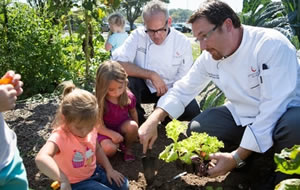
Chartwells K-12 chefs Josh Perkins (left) and Will Ratley with some
young gardeners at the Pattonville (Mo.) Youth Garden, one of the pilot
programs associated with Chartwells’ eat. learn. live School Garden Guide.
Growing young minds is
a powerful responsibility of school
districts across the country and
incorporating experiential learning and
sustainable practices for students promotes
long-term engagement and commitment to
sustainable school systems. School gardens are
an emerging platform for hands-on, minds-on
sustainable education, and Chartwells K12, in collaboration
with partner KidsGardening.org, are bringing the power of school
gardens to districts across the country through the “eat. learn. live.
School Garden Guide.” The mission is to inspire the next generation
to lead healthier lives while providing sustainable, nutritious
and educational opportunities to students from coast to coast.
The eat. learn. live. School Garden Guide is based on the philosophy
that school gardens serve as valuable education space to cultivate positive
health and wellness habits among students and promote sustainable
composting, planting, harvesting and consumption practices in schools.
The School Garden Guide supports the lifecycle of school gardens from
planning, to planting, to harvesting and safe utilization in school cafes
creating a sustainable cycle that maximizes garden produce, creating a
direct correlation between sustainable school practices and sustainable
health and wellness habits for children and the community.
The eat. learn. live School Garden Guide, a 116-page comprehensive
playbook, is a backbone for schools interested in starting or enhancing
their garden programs and is loaded with instructive and creative sustainable
gardening tips, nutrition education materials and guidance
for building community garden support. Everything from lemons to
bok choy is grown in the gardens, and often served to the students in
unique school meal recipes. In fact, some schools are sending nearly
1,000 pounds of fruits and vegetables per year into their own cafes.
Sustainability is a key focus of the program. To efficiently use the resources
available, student gardeners learn sustainable gardening skills,
like enriching soil naturally, water conservation, minimizing insect and
disease problems, and recycling nutrients. In many schools, the leftover
fruits and vegetables not eaten or used by chefs are turned into compost
and reused in the garden to nourish future rounds of crops. Composting
teaches our students to be more conscious of the food they eat and
don’t eat, allowing them to think critically about their environmental
footprint. This waste-conscious practice is successfully allowing school
gardens to become part of circular growing process.
School gardens, however, are more than just opportunities for
children to sustainably plant, grow, and harvest their own fruits
and vegetables, they also allow schools to better educate students
about health, wellness and sustainability — both on and off the
plate. Additionally, teachers are incorporating the program into
more traditional subjects, like art, biology, botany, chemistry, family
and consumer sciences, technology, math and business classes.
Throughout this program, our school administrators have
also seen a dramatic shift in the way students approach nutrition
and healthy eating. Because the students are exposed to a myriad
of fruits and vegetables from an early age, they’re eager to try
anything that comes out of the garden. The students have no reservations
about eating any of the produce because they’ve played a
role in the process. Things some students may shy away from, are
treated like more familiar foods — and they’re picking and eating
some of them right off the vine! Because of the garden program,
students are invested in their own nutrition and feel a sense of
ownership in the work they put into growing their own food.
Schools employing the garden program have seen unprecedented
success teaching their students about the importance of wellness
and sustainable practices through gardening. School gardens are
proving to be a vital component in a sustainable food system — K-12
schools are a seedbed for advancing sustainable practices and shaping
the future of the environment. By instilling sustainable values in
the K-12 generation, educators are giving students the opportunity
to better understand their roles in the ecosystem and the resources
to further their responsibility to the natural world.
For more information or to download the free garden guide for
your school, please visit www.chartwellsk12.com/schoolgardens.
This article originally appeared in the issue of .
About the Author
Margie Saidel serves as vice president of Culinary, Nutrition and Sustainability for Chartwells K12, one of the nation’s largest foodservice providers for K-12 school systems. Margie brings more than 20 years of experience in nutrition education and sustainable practices to the foodservice industry.