Don't Touch That!
- By Michael Fickes
- 11/01/17
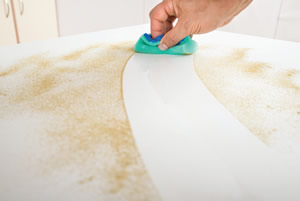
PHOTO © ANDREY POPOV
Yeeicch. Germs, germs, everywhere.
Do you have any idea of the nature of the millions of germs laying around on the floor, tables, counters and other surfaces that you come in contact with each and every day? Well, your mom was right. If you touch those germs, they might make you sick, along with the students and teachers who learn and work in your district’s schools.
Not all germs, microbes, bugs or pathogens are vicious, but some are. It’s important to clean up the nasty ones.
Hold your breath. Here are some germ facts you are not going to like.
According to Darrel Hicks, LLC, author of “Infection Prevention for Dummies,” germs come in a variety of forms. Hicks is an expert consultant in the field of cleaning and disinfecting. In his book, Hicks defines three particularly nasty microorganisms or bugs are bacteria, fungi and viruses. The book defines each:
Bacteria are single-celled organisms that sustain themselves as parasites, forms of life that exist by attaching themselves parasitically to hosts. Bacteria also form bacterial spores, which have thick outer walls that can survive in hostile environments that would otherwise kill unprotected bacteria.
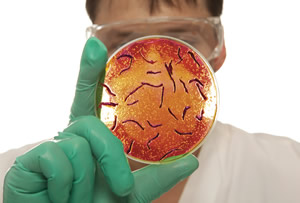
PHOTO © ANDREY BURMAKIN
Fungi take the form of single and multi-celled microorganisms. Examples include mildews, molds, mushrooms and yeasts. Some fungi cause disease. Fungi can attach to dust particles on solid surfaces including the floor.
Viruses are vehicles of disease that mutate while reproducing in infected individuals. The mutations are unique in each person, creating illnesses that can be difficult to treat.
Most people are familiar with the names of viruses that infect people. Life threatening bugs include the Human Immunodeficiency Virus (HIV), Hepatitis B Virus (HBV) and Hepatitis C.
A family of viruses called Noroviruses cause a variety of stomach and intestinal ailments including stomach flu. The Rhinovirus family causes the common cold.
MRSA Infections Lead to Surgery and even Death
Germs collect in hotspots or frequently touched surfaces that don’t always get disinfected, says Darrel Hicks, author of “Infection Prevention for Dummies,” as mentioned above.
Germ hotspots lead to infection problems such as MRSA (methicillin resistant Staphylococcus aureus), a staph infection resistant to certain antibiotics.
“This is a big deal in high school, college and professional sports,” Hicks says.
How big a deal is it? Lawrence Tynes signed on as a kicker with the Tampa Bay Buccaneers professional football team in 2013. He contracted MRSA while at training camp during his first season. He underwent three surgeries and six weeks of antibiotic therapy by way of a central line inserted above his heart. His career ended before it started.
Several high school athletes have died from MRSA infections, and it’s been going on for a while. Back in 2008, for example, an 18-year-old linebacker for Liberty High School in Osceola County (Fla.) contracted a MRSA infection, which at the time was not a top-of-mind diagnosis.
Complaining of back spasms, he went to the hospital on a Friday. They didn’t keep him. They provided him with medication and sent him home. By Sunday, he was back in the hospital with a rash and labored breathing that grew worse over the course of the day. By Monday, nothing could be done, and he died.
Empty Seats Cost School Districts
Too many empty seats can hurt a school district’s finances. For instance, some states have laws that tie school funding to attendance. In those states, high absenteeism due to germ-borne illnesses can cause funding shortfalls.
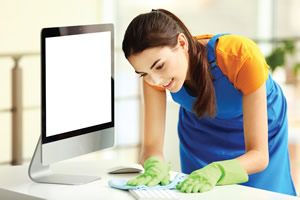
PHOTO © AFRICA STUDIO
“So there is a real budgetary reason why schools need to be clean and healthy – reimbursement depends on healthy students that come to school every day.
“According to predictions, the 2017-2018 flu season will be tougher than last year,” Hicks says. “An Australian flu is expected to hit North America this year.”
According to a CNN report, this year’s flu season in Australia produced 93,711 laboratory-confirmed cases through August 18, 2017.
Fifty-two people have died, compared to 27 over the same time period last year. Hospitalizations related to flu in Australia have also doubled, from 719 cases last year to 1,429 cases this year.
Despite these numbers and the predictions being made, Dr. Anthony Fauci, director of the United States’ National Institute of Allergy and Infectious Diseases told CNN, “There’s nothing really unusual about this year except that it’s a high year in Australia.”
Fauci went on to explain that sometimes the numbers are high and sometimes they are not. “All the flu-ologists, myself included, say the only thing that you can predict about influenza is that it’s going to be unpredictable,” continued Fauci during his CNN interview.
Still, flus and colds continue to produce empty seats in the nation’s K-12 schools year after year.
Can better cleaning and disinfecting by maintenance staffs help to drive the incidence of illness in schools down to lower levels?
Cleaning Up Infectious Hotspots
Hotspots are surfaces touched so frequently by so many people that those surfaces build up infectious levels of germs. Consider the conveyor belt at the cash register in the grocery store. Hundreds, if not thousands, of people may touch those belts between disinfectant cleanings.
K-12 hotspots include student desktops, the teacher’s desktop, doorknobs, blackboards, bulletin boards and everything else that students and teachers touch throughout the day.
Athletic departments produce hotspots touched by many, too: footballs, baseballs, basketballs, wrestling mats, chinning bars and more. Many dirty, sweaty hands touch school athletic equipment.
Infectious matter falls off of these surfaces and onto the floor. The shoes that walk the floors in school day in and day out add to the germs in school classrooms and hallways.
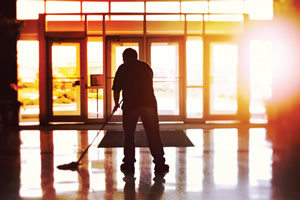
PHOTO © SUZANNE TUCKER
The maintenance department’s responsibility, then, is to disinfect these hotspots and keep them disinfected throughout every room in every school and hallway in the school district.
“Custodial staffs are pretty good about cleaning and disinfecting school lavatories. Best practices include cleaning the toilets as well as the doors to the booths as well as the latches on the doors,” Hicks says.
It is, however, easy to overlook certain surfaces. Take computer keyboards, for instance. Does your district’s cleaning policy mention wiping down keyboards as well as the screens on laptops and monitors?
“Another place that doesn’t get disinfected as often as it should is the teachers’ lounge,” Hicks says. “There are plenty of surfaces in teachers’ lounges that need attention: the coffee pot handle, the handle on the refrigerator as well as the chair arms and tabletops.”
How much more could there be? “People carry body lice,” continues Hicks. “Their bites can cause rashes and itching. Body lice don’t fly or run, and the best way to get rid of them is to vacuum thoroughly and to follow up with a pesticide instead of a disinfectant.”
Keeping school buildings free of germs and infectious materials is and will always be a challenge for a maintenance department. And, of course, one of the main responsibilities of the maintenance directors is to educate the maintenance crew: what has to be cleaned? How and how often must cleaning occur? What tools are appropriate for this dirt and those pests?
Maintenance and cleaning has always been a much more important job than has traditionally been thought. It is a significant part of caring for the health and welfare of children and teenagers in the nation’s K-12 schools.
CLEANING ROBOTS
Cleaning robots are being welcomed into healthcare facilities, today, to help meet the strict maintenance requirements of hospitals, clinics, and doctors’ offices. The robots spray disinfectant that covers the floors as well as counters and other raised surfaces.
Can robots help clean schools? Yes and no, says Darrel Hicks, LLC, author of “Infection Prevention for Dummies,” and an expert consultant in the field of cleaning and disinfecting. “I don’t see robots as general cleaning tools,” Hicks says. “I can see their use in disinfecting pre-cleaned surface — if surfaces aren’t pre-cleaned, the disinfectant won’t work properly.
This article originally appeared in the issue of .