Residence Facility Takes Shape at Mercer University

Construction started recently on the Lofts at Mercer Landing (the Lofts)—a mixed-use student residence at Mercer University in Macon, GA. The new residence facility will add 306 beds to Mercer’s housing stock and will accommodate students who are part of the growing university.
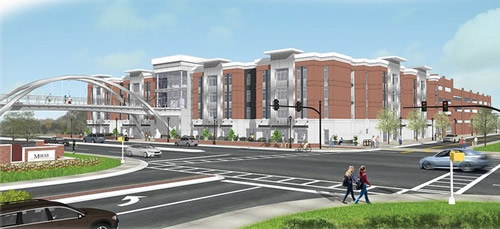
Lofts at Mercer Landing

Along with student housing, the Lofts is designed to feature a 316-car parking area, which will help create more spaces for commuting students. Sierra Development and SPP Commercial Group are handling design and development for the Lofts project. Construction for the project will be completed in August of 2019.

Featured

  • California K–12 District Completes Elementary School Campus Replacement

    The West Contra Costa Unified School District (WCCUSD) in Richmond, Calif., recently announced the completion of a replacement campus for Lake Elementary School, according to a news release. The school has capacity for 470 students between Transitional Kindergarten (TK) and sixth grade.

  • Preparing for the Next Era of Healthcare Education, Innovation

    Across the country, public universities and community colleges are accelerating investments in healthcare education facilities as part of a broader strategy to address workforce shortages, modernize outdated infrastructure, and expand clinical training capacity. These projects, which are often located at the center of campus health and science districts, are no longer limited to traditional classrooms.

  • University of Arizona Approves New Residence Hall

    The Arizona Board of Regents recently approved plans for a new residence hall at the University of Arizona in Tucson, Ariz., according to a news release. The new facility is scheduled to open in fall 2028 and have the capacity for more than 1,200 students, enforcing a new university expectation that all first-year students live on campus.

  • Doerr School of Sustainability Accelerator

    From Concrete Warehouse to Innovation Hub: Accelerating Sustainability at Stanford

    The transformation of a once windowless, concrete publishing warehouse into a sun-drenched center for global innovation began with a single, fundamental challenge: how to turn an industrial storage shell into a space built for human connection.