Texas Technology Academy Opens for Students

The new Katherine Johnson Technology Magnet Academy was recently completed and is preparing to open its doors to students for the upcoming 2018 academic year. The 109,500-square-foot, two-story building will serve students in the DeSoto Independent School District in DeSoto, Texas.
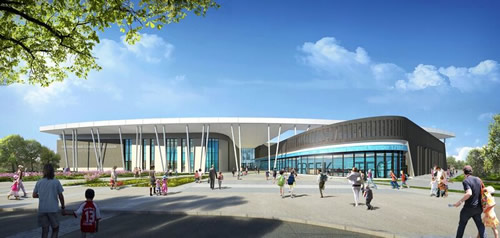
Johnson Academy

The Johnson Academy will offer students the chance to explore and grow using the latest technology and project-based, collaborative learning. The school will also feature a two-story media center, along with computer labs, music, and art spaces. Architecture firm Perkins+Will handled the design and planning of the school, which will house almost 900 students.

Featured

  • DFW-Area District Opens New Replacement Middle School

    The Eagle Mountain-Saginaw Independent School District near Fort Worth, Texas, recently held a ribbon-cutting ceremony for a new replacement middle school campus, according to a news release. The new facility for Wayside Middle School, originally established in 1964, was built on the site of the former district administration building and funded through Bond Proposition A in 2023.

  • South Carolina District Starts Construction on $50M Middle School Renovation

    The Aiken County Public School District in North Augusta, S.C., recently held a groundbreaking ceremony for the $50-million renovation and expansion of North Augusta Middle School, according to a news release. The project’s funding comes from the 2024 renewal of a one-cent sales tax approved by local voters.

  • Stanford Completes Construction on Graduate School of Education Facility

    Stanford University in Stanford, Calif., recently announced the end of construction on a new home for its Graduate School of Education, according to a news release. The university partnered with McCarthy Building Companies on the 160,000-square-foot project, which involved two major renovations and one new construction effort.

  • Pitzer College

    Designing for Change in Higher Ed Learning Environments

    Higher education will continue to evolve, and learning environments must evolve with it. By prioritizing adaptable infrastructure, thoughtful reuse, strong energy performance, and wellness-centered design, campuses can create spaces that support learning today while remaining flexible for the future.