Dedication Ceremony Held for New HISD Energy Institute High School
On September 19th, Houston ISD and VLK Architects celebrated the dedication of the new Energy Institute High School. The ceremony was held at the new campus on Southmore Boulevard in the heart of Houston’s Third Ward where students, staff, administration, and community members gathered for a unique board cutting ceremony.
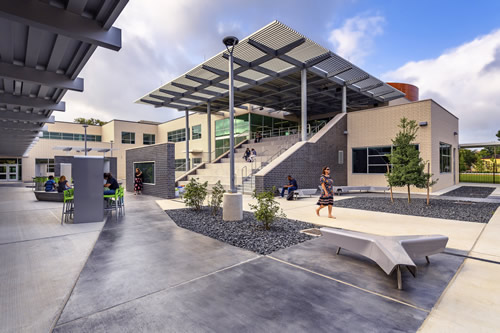
The new school is home to Houston ISD’s magnet program, specializing in project-based learning centered on the energy industry. This new campus, established in the “Energy Capital of the World,” is helping the district pave the way for industry ready students well versed in corporate culture. The school spans 116,000 square feet and has capacity for 813 students in grades 9-12. Comprised of three buildings that converge at a covered outdoor learning courtyard, the campus design is reflective of industry culture that supports collaborative learning. Each building is comprised with educational environments for individualized focused learning, flexible collaboration, and hands-on CTE lab experiences.
“Our partnership with everyone at VLK was so genuinely successful because of their ability to advocate for our teachers and our students every step of the way,” said Energy Institute Principal, Lori Lambropoulos. For more information, visit www.vlkarchitects.com.