Improve Indoor Air Quality in Schools with Better Vacuuming
 Inadequate cleaning may affect up to 20 percent of the occupants of school buildings who are susceptible to allergies or asthma. To address school cleanliness, ISSA, the international association serving cleaning professionals, released a comprehensive cleaning standard for K-12 schools, which provides building managers with a tool to effectively measure the cleaning process and implement steps to improve.
"Effective cleaning is especially important in light of a growing body of evidence that concludes that improved hygiene in schools results in reduced illnesses and reduced absenteeism," wrote members of the standard's executive committee, who also noted that proper vacuuming is a cornerstone of effective school cleaning.
The Minnesota Department of Health (MDH) conducted a widespread inspection of schools throughout the state which confirmed the problem of inadequate cleaning in schools — levels of allergens exceeded risk thresholds for asthma and allergy symptoms in most buildings inspected. The allergy and asthma triggers found included mold spores, pet allergens and elevated dust mite allergens, most of which were inadvertently transported into the schools by children, teachers and staff.
School floors contained the largest concentrations of allergens due to heavy foot traffic, and carpeted surfaces, common in school auditoriums, offices and libraries, contained higher levels of allergens than hard-surface floors. The MDH study also found that ideal maintenance practices for cleaning carpet were not fully implemented. These practices include:
- Deep cleaning carpeting at least twice per year;
- Replacing carpet according to manufacturer recommendations;
- Thorough daily vacuuming with high-quality HEPA filter vacuums; and
- Properly maintaining cleaning equipment.
In addition to allergens on floors, the MDH study noted concentrations of dust-associated allergy and asthma triggers on student desks, furnishings, open shelves, window treatments, ventilation diffusers, educational materials and decorative items. Surfaces six feet above the floor — typically the height of ventilation diffusers — showed dust levels associated with lung inflammation potential to be three times greater than those of dust levels on the floor.
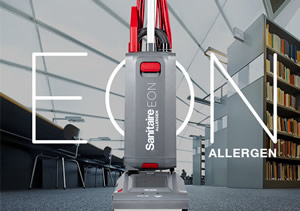
Brad Hoare, product manager for Sanitaire, frequently consults with school maintenance directors to improve the indoor air quality of their buildings. Hoare recommends that maintenance directors select vacuums that have earned the Carpet and Rug Institute (CRI) Seal of Approval, such as the Sanitaire® EON™ ALLERGEN upright. The EON™ ALLERGEN is CRI Gold certified due to its filtration, dust containment and soil removal capabilities.
The EON™ ALLERGEN is also the first commercial vacuum certified asthma & allergy friendly® by the Asthma and Allergy Foundation of America. Scientifically proven to help reduce exposure to allergens and irritants, the EON™ ALLERGEN helps primary and secondary school and college maintenance directors achieve exceptionally clean learning environments.
While upright vacuums are frequently associated with carpet cleaning, Hoare says other commercial vacuums with sealed HEPA filtration can effectively clean tile and other surfaces and prevent allergy and asthma triggers from becoming airborne. Several cleaning professionals suggest that they can clean floors faster by removing dry dirt with a vacuum instead of a dry mop before wet-mopping. Canisters and backpack vacuums offer a fast and thorough way to remove dust from ventilation diffusers, window coverings and other above-the-floor surfaces. Hoare recommends that schools also invest in spotters to clean other liquid biological contaminants that are common in schools.
Sponsored by: Sanitaire