Clinton Prairie Performs District-Wide Upgrades
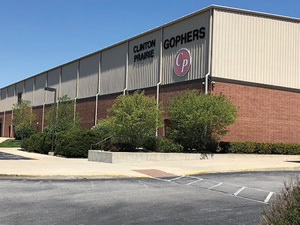
Johnson Controls helped Clinton Prairie School Corporation make $4.7M in district-wide updates, enabled through an energy performance contract.
Johnson Controls has helped to address aging infrastructure and limited capital budget at Clinton Prairie School Corporation (CPSC) in Frankfort, Ind., through district-wide exterior and interior building updates. The upgrades, including new wireless-controlled lighting in the main gymnasium, exterior access doors and building control optimization, were made to help increase student and teacher productivity and provide a more comfortable learning environment.
The $4.7M in improvements were enabled through an energy performance contract, which uses guaranteed savings to offset the cost of the projects. Upgrades were implemented during the school’s off-hours to avoid class and learning disruptions, and final project elements were completed in March 2019.
“Like many school districts, ours faced deteriorating infrastructure and a restricted budget for years,” said Amanda Whitlock, superintendent of Clinton Prairie School Corporation. “By collaborating with Johnson Controls, we now have the necessary building enhancements that will position our district for a successful future and make a positive, long-term impact on our funding efforts.”
“Through our partnership, Johnson Controls managed the project, allowing Clinton Prairie School Corporation to reap the benefits of infrastructure upgrades and energy savings,” said Jennifer Payne, Performance Infrastructure account executive, Johnson Controls. “Taking over project responsibilities allowed the school district to focus on providing the best education and learning environment for its students and teachers.”
CPSC received a $2,033 prescriptive rebate for the kitchen equipment and a $1,748 rebate as a custom incentive for roofing, duct seal, and the building enveloped from Duke Energy.
www.johnsoncontrols.com
This article originally appeared in the School Planning & Management April/May 2019 issue of Spaces4Learning.