Wofford College Building Environmental Studies Center

SPARTANBURG, SC – Wofford College has broken ground on its new environmental studies center that will be Green Globe-certified for its sustainable and environmentally conscious features, such as a partial green roof and solar roof panels. Green Globe certification is a structured assessment of the sustainability performance of the facility.
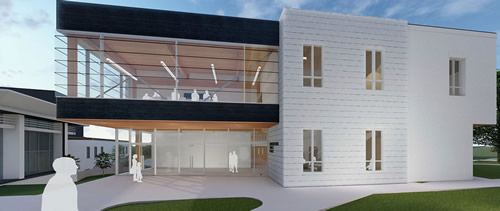
Wofford College Environmental Buidling

The 20,000-square-foot facility will feature advanced laboratory space, a seminar room, outdoor patio and garden spaces, and classroom and office space for Wofford’s Department of Environmental Studies as well as the other sciences.

The building also will include a system for capturing rainwater for irrigation and will use cross-laminated timbers, which are made of sustainable, all-wood construction.

Featured

  • abstract representation of hybrid learning environment

    The Permanence of Change: Why Hybrid Is the New Baseline

    Hybrid learning is here to stay, and it's reshaping how campus spaces function.

  • University of Rhode Island, Gilbane Partner for Three New Residence Halls

    The University of Rhode Island in Kingston, R.I., recently announced a public-private partnership with construction development firm Gilbane, according to a news release. Gilbane will soon start construction on three new residence halls with a total of 1,100 beds: two with apartment-style suites in northwest campus, and a reconstruction of the Graduate Village Apartments for graduate students.

  • UT System Board of Regents Approves $108M Housing Complex

    The University of Texas System Board of Regents recently announced the approval of a new, $108-million housing complex at the University of Texas at El Paso (UTEP), according to a news release. The facility will stand four stories and have a total of 456 new beds for freshmen students.

  • Different Starting Points, Same End Goal

    Higher education campuses can enhance student experience by implementing mobile credentials to streamline building access, on-campus payments, and access to other amenities. This enables students to connect to their campuses through the technology they use most: their mobile devices.