Construction Nears Completion on Drone Lab at St. Mary's University in TX
- By Dian Schaffhauser
- 09/29/20
St. Mary’s University in San Antonio, TX is nearing completion of new drone lab, which is on target to be done in October. The $600,000 Unmanned Aerial Systems (UAS) Lab is being built by the School of Science, Engineering and Technology.
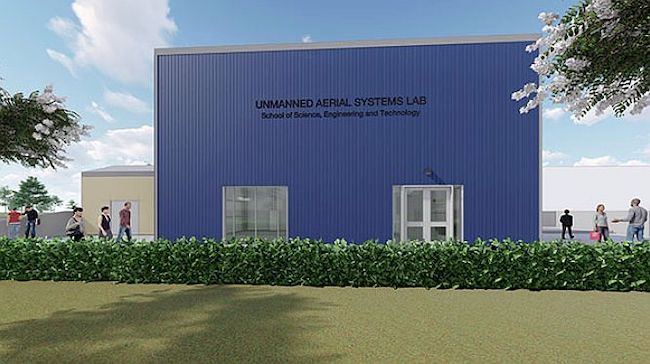
The 1,734-square foot lab has a 25-foot ceiling and includes a flight area, an observation area and workstations. The expectation is that faculty will be able to include drones in their instruction and students will be able to participate in drone-related research for industry partners.
"This is an opportunity to add programming that will launch St. Mary’s graduates into a fast-growing emergent industry," said Winston Erevelles, dean of the School, in a press release. Erevelles said that the Federal Aviation Administration predicted that the U.S. registered commercial drone fleet would climb to between 442,000 and 1.6 million units in the next few years, "which will in turn create a few hundred thousand jobs."
According to Erevelles, the facility will serve as a multi-purpose operation, supporting a new UAS concentration under the B.S. in Engineering Science program that launched this fall and housing summer camps for high school students.
"Drone technology has been around for more than 50 years. However, it was exclusively used by the military and was not available to the private sector until recently," added Bahman Rezaie, a professor of electrical engineering, who has been an early proponent of drone research at the university. "The more drones become part of everyday business in all aspects of life, the more need for a workforce that is knowledgeable and capable of maintaining and designing a variety of drones."
Funding came from a $3 million Title V – Building Capacity for Excellence in STEM Education grant as well as support from the Albert & Margaret Alkek Foundation and the Union Pacific Foundation.
About the Author
Dian Schaffhauser is a former senior contributing editor for 1105 Media's education publications THE Journal, Campus Technology and Spaces4Learning.