Community College Opens Automotive Technology Center
Ivy Tech Community College Indianapolis in Indiana has officially celebrated the grand opening of the Ivy Tech Automotive Technology Center. The $14-million, 59,000-square-foot facility opened as part of a series of developments in the city’s International Marketplace District. The facility was designed and built by GMB Architecture + Engineering in partnership with McGee Designhouse and JPS Consulting Engineers.
According to a press release, the center will certify and train students for high-paying, available jobs in the automotive sector. The classes are taught by Automotive Service Excellence (ASE) Master certified instructors with more than 100 practice vehicles available to provide experience with company-specific diagnostics and information. The new facility features classrooms, training labs, student collaboration areas with a capacity of 600, faculty offices, and corporate labs. The center is scheduled to open to students in time for the fall 2021 semester.
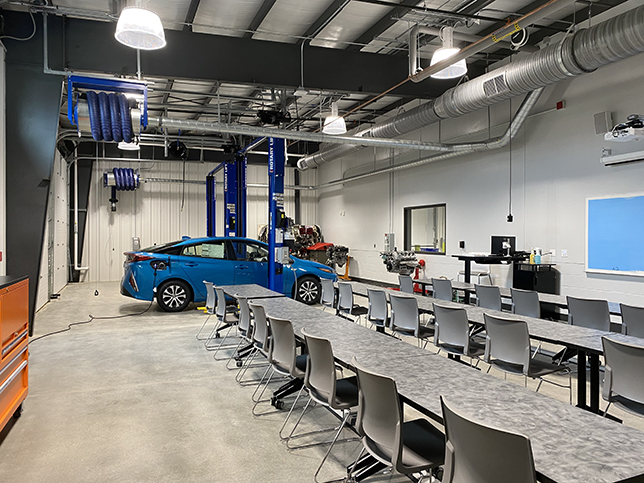
Photo credit: GMB Architecture + Engineering
“This new facility will deliver first-class educational opportunities that are not only affordable but also provide outstanding job placement rates for Ivy Tech students, bringing a vital skilled workforce to Indiana communities,” said Peter Giles, Vice President of Business Development for Cinnaire. “It is our goal at Cinnaire to create economic opportunity in communities that the mainstream market doesn’t serve, and we are proud to be an investor in this project.”
The new facility was first announced in 2016 after Ivy Tech received $5 million as part of a capital campaign. It also received part of a $1 million gift from the Indianapolis Auto Trade Association and about $1 million worth of land donated by local businessman Sid Eskenazi.
Ivy Tech’s Automotive Technology program has an enrollment of about 300 students and boasts a 100% job placement rate. The program also offers its students paid, cooperative education opportunities with local businesses and industries.
About the Author
Matt Jones is senior editor of Spaces4Learning. He can be reached at [email protected].