Midwestern State to Update Science Building with Texas Funding

A Texas university has received nearly $45 million for capital projects from the state. Midwestern State University will use its allocation to update a science building and do infrastructure upgrades across the campus.

Bolin Science Hall will be the recipient of most of the funding. Built in the 1960s, the structure underwent a partial update in 1997. The latest renovation will modernize lecture halls, teaching and research laboratories, conference rooms and offices, including adding technology enhancements and life-safety improvements.
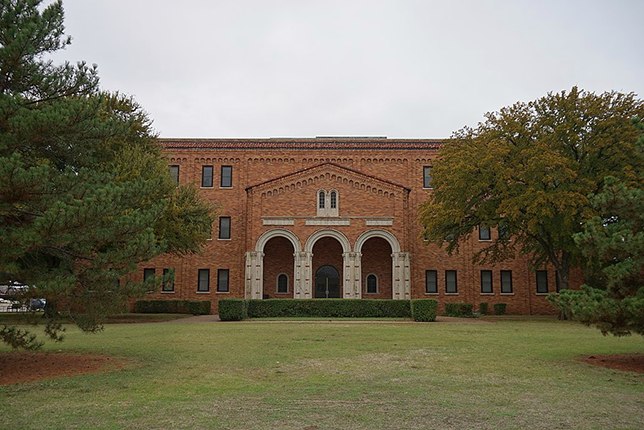
Bolin Hall at Midwestern State University

"Over the past 20 years, our spaces in Bolin Science Hall have become some of the most utilized on campus," said Marcy Brown Marsden, dean of the McCoy College of Science, Mathematics & Engineering, in a statement. "This promise of a Bolin Hall transformation will allow us the needed spaces and resources to recruit students to MSU Texas and significantly enhance our ability to offer a modern facility for students to learn, conduct research and collaborate."

The MSU funding was part of a $3.3 billion bond allocation recently approved by the Texas legislature, which is sending millions to the University of Texas and Texas state university institutions, covering construction and updates to research buildings, health facilities and other projects. MSU has also received a $5 million pledge from the Texas-based McCoy Foundation to finish its Bolin Science Hall work.

About the Author

Dian Schaffhauser is a former senior contributing editor for 1105 Media's education publications THE Journal, Campus Technology and Spaces4Learning.

Featured

  • Designing the Bridge Between Inclusivity and Independence in K–12 Schools

    Fostering independence is fundamental to learning and development for K–12 students. It offers many proven benefits, such as enhanced confidence, problem-solving, decision-making, and social skills. However, this foundational objective loses its impact if it’s not accessible and adaptable to all students. Inclusivity plays a critical role in cultivating independence and healthy autonomy for students, fostering positive student learning outcomes by uniting pedagogy with the physical learning environment.

  • Rethinking K-12 Schools as a Continuous Learning Experience

    Most students move through three or more separate facilities during their K-12 journey, yet the built environments they encounter at each stage have traditionally been designed in isolation, with little continuity in spatial language, learning philosophy, or physical resources. Each new school is a reset with different layouts, learning models, expectations, and ways of moving through a building. The next generation of school design is making the case that the first day of kindergarten and the last day of high school can and should feel connected through common support systems and infrastructure in the physical environment.

  • Minnesota District Converts Middle School into Community Hub

    White Bear Lake Area Schools in White Bear Lake, Minn., recently announced the end of a major renovation project that converted a former middle school into a new centralized district and community hub, according to a news release.

  • ed tech conference calendar

    Upcoming Awards, Events & Webinars