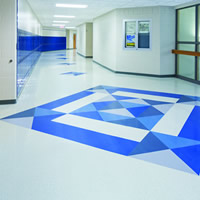
Grand Valley Local School District in Orwell, OH, has had nora premium rubber flooring in place for more than a decade. But it looks as new today as when it was installed.

Campus administrative and office areas have requirements for flooring that differ from academic, residence hall, athletics, and other facilities. Here's what to consider for these working spaces.
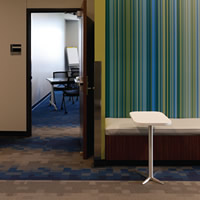
Creating learning environments that positively impact students.

Walls and ceilings have evolved from flat white panels into attractive interior
design elements that contribute to educational quality.
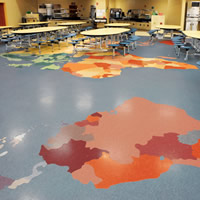
Carpet, tile, rubber, and hardwood? All have their benefits.
Don't overlook the importance of floor coverings in your campus facilities.
Colleges and universities are centers of learning and recreation. These activities are year-round, and in most cases, campuses are constantly bustling with activity—even in the summer time. When it comes to constructing or renovating campus spaces, making sure students have spaces in which to learn can be tricky, with buildings closing for work to be performed. Gwen Gilley, AIA, LEED-AP BD+C, principal, Hord Coplan Macht, has seen this scenario play out several times, and explains some of the strategies her firm has employed to help make the construction phase easier on students, faculty, and staff.