University of Minnesota Finds Big Savings
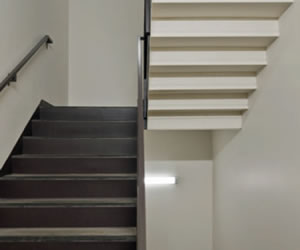
The University of Minnesota is saving both energy and money, thanks to energy- efficient LED lighting.
The University of Minnesota, Twin Cities (U of M) assessed its energy usage across campus, which identified its illuminated stairwells as a savings opportunity. At the time, many of the stairwells were fully illuminated 24 hours per day throughout 120 buildings across campus.
In 2010, experiments with lighting solutions validated the investment in LED lighting integrated with occupancy control as a cost-effective option for its overuse in stairwell lighting.
“While we were working on the project, we learned there were actually additional innovative ways to make even more energy saving improvements,” says Blaine O’Brien, senior energy auditor for Energy Management, a division of Facilities Management at U of M. “We were introduced to an LED luminaire concept that featured integrated occupancy sensors and dimmers. For us, this was a great match in technology.”
The U of M energy management team was introduced to the W Series LED wall bracket and surface mount luminaries from Lithonia Lighting. The LED luminaires have dual technology micro-sensors for occupancy sensing and optional sequential controls.
In August 2012, a total of 961 fixtures were replaced on the West Bank, approximately one fifth of the campus. The fixtures produce an estimated annual energy savings of 379,392 kilowatt hours, which equates to more than $30,000 annually — just on the West Bank. The LED lighting and digital controls now reduce the energy consumed in stairwells by 90 percent.
Once the project is complete, nearly 6,000 W Series LED luminaires will illuminate stairwells across campus.
For more information about the Lithonia Lighting W Series LED luminaire from Acuity Brands, please visit www.lithonia.com/wseries.
www.lithonia.com/wseries
This article originally appeared in the College Planning & Management November 2013 issue of Spaces4Learning.