Summer Is No Vacation When It Comes To Maintenance
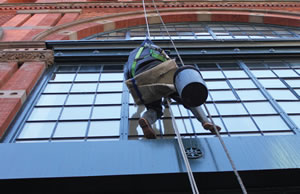
PHOTO © GLORY RUMOURS PHOTOS/FLICKR
How do you schedule necessary maintenance projects when school facilities are being used year-round for a variety of purposes?
Some people are still under the impression that when classes end for the summer, the schools are empty, except for summer school and a few extracurricular activities. But that’s not necessarily an accurate picture.
Summer maintenance is getting to be more and more of a problem, with year-round schools, wrap-around programs and the growth of recreation programs. Schools are now being used the way they should be, but that makes it much more difficult to plan large maintenance projects.
School buildings and grounds are now being better utilized by the students and communities. In some districts, as many as one half of the schools are in use during most of the summer. While that is a positive development, it complicates scheduling.
Summer classes are not the only activities to work around. In many districts, community-centered agencies are using district facilities to run all types of programs. That, too, is a good thing, but it poses problems for maintenance departments. If they are working on a project at the same time that one of those programs is in progress, they need to be concerned about noise and dust levels. And, they also must make sure areas are cleaned up immediately so they are available for the next occupants.
In reality, this is more than a summer issue; it affects scheduling year round. Tasks that once were reserved for the summer “recess” now need to be rethought or rescheduled.
For example, replacing classroom windows. In the past, windows would be replaced during the summer break. The classrooms were empty, furniture could be stacked in the hallways without creating problems, cleanup of the rooms could be consolidated, the outdoor temperatures were appropriate for creating holes in the walls and, after all, that is the way it had always been done.
But, with many of the rooms being used year-round, this is no longer the only option. By rethinking and rescheduling, the work can be scheduled to take place during the evenings, anytime between mid-spring and early fall. A window contractor may be able to complete five or six classrooms each night. If there were activities scheduled for those rooms, other rooms could be made available while the work was being done.
Rethinking, or taking a different approach, is one of the keys to completing the work under these challenging schedule conflicts. Historically, schools received a thorough cleaning during the summer break. That meant cleaning and dusting everything — desks, walls, lighting fixtures — and stripping and waxing the floors. As schools become less and less vacant during the summer months, it is becoming less and less possible to get all of the work done.
One different approach that has been successful in some districts is to implement a roving cleaning crew that would come in after hours and clean a room at a time throughout the year. Some districts schedule custodial staff to take advantage of the school breaks — the couple of weeks after summer school, fall, Christmas and spring break — to do the work.
Some projects are emergencies or so critical that they require to be undertaken while the building is in use. For example, if a boiler is situated in a remote area, with a separate entrance, you can work on the replacement while the parts of the building are being used, as long as you are not creating too much dust and the noise level is not too great.
There are also health concerns that need to be considered when scheduling maintenance while facilities are occupied. Everyone has become more aware and concerned about environmental and IAQ issues related to maintenance and repair work. So some work, like laying carpet, painting, roof repair or asbestos removal may have to be scheduled during off periods, even though they are not taking place in occupied areas.
In addition to the yearly housecleaning, there are major projects that are easier or safer to accomplish when the building is not in use. For example, boilers, lockers and roofs periodically require replacement, HVAC systems need to be installed or maintained, technology must be upgraded and kitchen and cafeteria areas need cleaning and preventive maintenance. That does not include work required by government regulation or containment, or projects related to ADA remodeling.
BUDGETS
Of course, the district’s budget is an important factor in the scheduling of any maintenance. Many school district budgets run July 1 through June 30, which means you need to start working on plans in October, November and December in order to have a tentative schedule together for the following year’s budget. In most cases, extensive projects need to be budgeted a year in advance, or budgeted to cross over into multiple budget years.
What about state funding? Typically, state aid is based on expenditures from the previous year. In most cases, the money must be used during the fiscal year that it was granted. So the trick is to pick the projects that need to get done, and use funding to pay for the pre-design of next year’s projects.
COLLABORATION
The key to a successful maintenance plan is to have buy-in from all who are going to be affected. The facilities and maintenance teams need to work hand-in-hand with the other education departments. To make that easier, start planning with the other departments well in advance. That gives the maintenance, academic and athletic departments time to decide which projects need to be done and which buildings are going to be accessible. That way you can come up with a plan that accommodates the community, the recreational programs, the facilities office and the academic department’s expectations.
Tips On Keeping Facilities Clean, Green and Healthy
The following eight tips can help a school or district’s cleaning professionals and building managers stay healthy and stay green, while providing a safe and healthful environment in the schools
1. Floors in focus: Floors take a beating during adverse weather conditions. Scrub entry floors to remove soils and then recoat to give the floor added protection. Cleaning along with burnishing cycles may need to be increased.
2. Off the carpet: Many facilities delay cleaning carpets. This can be a mistake as the carpets can become saturated with contaminants and impact indoor environmental quality. Thoroughly cleaning carpets can help keep them clean throughout the year.
3. Break the restroom routine: Cleaning professionals often develop cleaning habits, especially in restrooms, cleaning counters and fixtures in the same way, etc. Seasonal transitions call for taking a fresh look at restroom cleaning procedures and adopting some new technologies, products and methods where appropriate.
4. Install mats: During winter months, install 15 feet of matting to capture ice melt, salt and sand.
5. Repair any floor defects: Soils and ice melt can become trapped in chips, cracks, crevices, etc.
6. Know product specifications: Some floor care chemicals, as an example, are best applied at certain temperature ranges.
7. HEPA savings time: An easy way to remember when to clean or change HEPA filters is by changing them when Daylight Savings Time begins and ends.
8. Green proof: A new season can also be the start of a new cleaning strategy. Many facilities transfer from conventional to green cleaning programs when seasons change. This can be a perfect time to transition to proven green cleaning chemicals.
This article originally appeared in the issue of .