Richmond Public Schools and Prairie Seeds Academy
THE CHALLENGE
According to the 2014 School Nutrition Operations Report, produced by the School Nutrition Association, among the most pressing issues facing foodservice directors are adherence to the new school meal patterns and the declining number of students participating in school lunch. The USDA reports that more than one million students have stopped purchasing school lunches since the new nutritional guidelines were enacted. Some districts have opted out of the National School Lunch Program (NSLP) altogether. The School Nutrition Association reports that school cafeterias waste nearly $4 million in fruit and vegetables each day, as students throw out foods they are served under the guidelines.
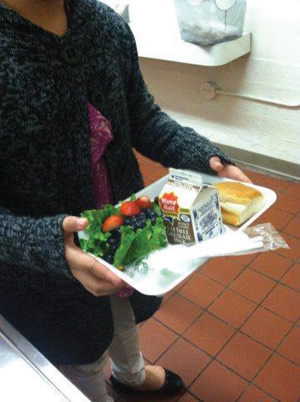

While the Healthy, Hunger-Free Kids Act was intended to be a positive thing for students, many of those students stopped eating school lunches. They claimed they didn’t like the food that was being served. Richmond Public Schools and the Prairie Seeds Academy decided to try NutriStudents K-12, which works with districts to develop more creative and appealing menus to attract more student participation in the lunch programs and also simplifies the related tasks, such as the ordering of food and supplies and the tracking and reporting of menus and nutritional data.
THE SOLUTION
Crystal Vang, foodservice director of Minneapolis Prairie Seeds Academy, was among the school foodservice directors who struggled with student participation in lunch after the implementation of the Healthy, Hunger-Free Kids Act in 2012. The school had just over 500 of its 790 students participating in lunch each day. Vang noted that students complained about the food quality and limited choices. She said, “More kids quit eating lunch, and those who did wasted food because they didn’t like it.”
Susan Roberson, director of School Nutrition Services for Richmond Public Schools in Richmond, Va., states, “The NJPA US Foods contract streamlines our purchasing process. It makes for a smoother transition in terms of getting new products and consistency with availability of products — that’s been very good, it was inconsistent before the contract. It’s also been extremely beneficial to work with just one vendor, US Foods, for 90 percent of our products; it reduces issues and invoices.”
NutriStudents K-12 includes more than 100 weeks of USDA-certified menus and recipes (including ethnic food choices), training to help foodservice staff understand reimbursable meal patterns and the Nutrislice menu promotion web and mobile applications to help entice participation.
The system saves staff time and also provides solutions in the following areas: guidance and help implementing offer versus serve procedures, which results in less waste; support with operational issues; reporting requirements; and staff resources and direction related to serving procedures and compliance with the federal guidelines.
NutriStudents K-12 works alongside of districts’ existing nutrition management software to simplify ordering of food and supplies, and tracking and reporting of menus and nutritional data. It’s available to districts of all sizes nationwide as part of an NJPA foodservice contract.
IMPACT ON LEARNING
Prairie Seeds has successfully raised its lunch participation to about 700 students per day by using the NutriStudents K-12 system. “Kids are excited about breakfast and lunch. They like wide variety and ethnic choices of foods. Participation has increased a lot — much more than we expected,” Vang says.
Jitendrapal S. Kundan, director of New City Charter School in Minneapolis, indicates his school had a similar response, “It would be almost impossible for a smaller school such as ours to offer our students meal choices that meet the USDA nutrition requirements. With this program, our school community is very pleased with our menus. The food is both delicious and healthy.”
“Menu planning, reporting, food safety issues, record keeping — it was really the equivalent of a full-time position to handle what this system is doing for us right now. Really, I’d say we save 40 hours a week with this program,” Vang says.
Editor's Review
Some students’ most nutritious meals are provided at school. When students stopped eating lunch, it was a potential health issue, not to mention the fact that studies show a hungry student is less productive than one who has eaten a proper meal. These schools have found a way to increased numbers of students participating in school lunches. And, while doing so, were able to save money, save staff time and provide consistently healthier lunches.
This article originally appeared in the issue of .