New Washfountain Makes A Splash
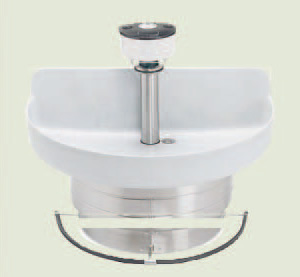
The new washfountain at Madison Elementary takes up less space, and is much easier to clean than the school’s previous antique model.
Madison Elementary, part of the West Allis-West Milwaukee School District, has more than 230 students enrolled in classes ranging from kindergarten to sixth grade. As with many older schools, Madison could use a few facility upgrades, particularly with regard to classroom hand washing areas.
After decades of use, a washfountain in Madison Elementary’s kindergarten classroom was wearing out and desperately needed to be replaced. “Most of the spray holes were permanently clogged, so the water would shoot out of the others and over the edge of the washfountain making a big mess,” says school custodian, Bill Ziolecki.
“Maintenance had become a big challenge on the old washfountain,” adds Ziolecki. “It was also a bear to clean, and frankly, the bowl material looked better if we left it alone.”
As part of an 80th Anniversary celebration, Bradley Corp. held a search for the “Ultimate Washfountain” to find the most unique, antique, or otherwise unusual washfountains. After judging the entries, visitors to Bradley’s website chose Madison Elementary as one of the ultimate winners. Most likely, Madison was selected because their washfountain was extremely old, and a new washfountain would benefit kindergarten and first grade students.
In early 2003, Madison Elementary received their grand prize, a new Bradley Terreon Classic Juvenile Height Washfountain. Juvenile-height washfountains accommodate at least three users — a feature that conserves water and energy and takes up less space than restrooms or classes equipped with conventional sinks.
“The new Bradley washfountain is much easier to keep clean,” Ziolecki says. “I’d like to get washfountains throughout the entire school. The children really have fun using them.”
www.bradleycorp.com
This article originally appeared in the issue of .