Steel Brings Transparency to Construction Sustainability
- By Mark A. Thimons
- 01/01/17
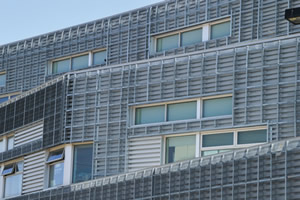
PHOTO COURTESY OF AGWAY METALS INC.
Sustainability and environmental issues are becoming more prominent and widely acknowledged
throughout the construction industry, and school construction
is no exception. As school planners’ objectives shift to include
sustainability and earning green building certifications like the
U.S. Green Building Council’s Leadership in Energy and Environmental
Design (LEED) for projects, it is vital for them to have
access to the potential environmental impacts of the materials
and products they use in building designs. In an effort to increase
transparency and help architects and designers fully understand
these impacts, the North American steel industry has developed
a range of industry-wide Environmental Product Declarations
(EPDs) for steel construction products.
EPDs help construction professionals make more informed
material decisions by going beyond single sustainability attributes to
summarize comprehensive cradle-to-gate impacts of a product.
EPDs can also contribute to planners’ efforts to earn LEED v4
credits. Simply providing EPDs for a minimum number of building
products allows architects to earn points through the EPD — specific
credit in LEED v4. Other materials and resources credits can
be achieved by disclosing and optimizing material environmental
impacts. EPDs and other transparency resources can help enable
construction professionals to demonstrate the products used in
their building projects are environmentally responsible.
Partly due to the availability of steel product EPDs and partly due
to its inherent characteristics, steel offers immediate advantages by
helping construction professionals earn LEED v4 credits in categories
such as recycled content, life-cycle impact reduction, sourcing
of raw materials, building product disclosure and optimization, and
construction and demolition waste management. In addition, the
steel industry EPDs are set apart from competing materials, like
wood, by covering all relevant potential environmental impacts —
from the extraction of natural resources through the production of a
finished product — for a fully transparent life-cycle view.
To demonstrate the overall sustainability of projects in the
planning phase, some architects have also begun to employ whole-building-life-cycle assessments, using data from various product
EPDs and other available life cycle inventory data to assess potential
project environmental impacts early in the design process.
Construction professionals interested in viewing and using
EPDs and other transparency resources in their building projects
can visit www.buildusingsteel.org for a list of steel product EPDs and updates on
other resources. Currently, the site includes EPDs for the following
product categories:
- Cold-Formed Steel Studs and Track — from the Steel
Recycling Institute
- Open Web Steel Joists — from the Steel Joist Institute
- Steel Roof Deck and Steel Floor Deck — from the Steel
Deck Institute
- Roll-Formed Steel Panels (Canada) — from the Canadian
Sheet Steel Building Institute
- Roll-Formed Steel Panels for Roofs and Walls — from the
Metal Construction Association
- Insulated Metal Panels — from the Metal Construction
Association
- Fabricated Steel Plate — from the American Institute of
Steel Construction
- Fabricated Hot-Rolled Structural Sections — from the
American Institute of Steel Construction
- Primary Structural Steel Frame Components — from the
Metal Building Manufacturers Association
- Secondary Structural Steel Frame Components — from the
Metal Building Manufacturers Association
- Roll-Formed Metal Wall and Roof Panels — Metal Building
Manufacturers Association
This article originally appeared in the issue of .
About the Author
Mark A. Thimons, P.E. is vice president of sustainability with the Steel Market Development Institute, a business unit of the American Iron and Steel Institute.
He is responsible for overseeing the Steel Recycling Institute as well as research projects demonstrating the life cycle advantages of steel in all markets.