O&G Breaks Ground at Grasso Technical High School
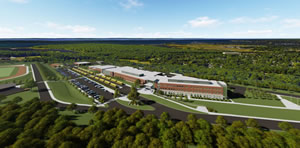
Grasso Tech High SchoolO&G Industries, Connecticut’s largest privately-held construction company, began work on the construction of the new Ella T. Grasso Technical High School in Groton, Connecticut.

O&G was selected as the Construction Manager for the $98.3 million dollar construction project. The project will include construction of a new 220,000 square foot facility on the existing site.  The new school will be built adjacent to the current facility with completion of the new building expected in the fall of 2019 for arriving students, followed by demolition of the existing school where new athletic facilities will be sited on its former footprint. 

Grasso serves students from 24 towns in Southeastern Connecticut with an annual enrollment of over 500 students.  Programs offered at the school include Automotive Technology, Culiary Arts, Electrical, Manufacturing Technology, Plumbing & Heating, HVAC and Information Systems Technology.   The new facility will allow the school to serve 800 students from throughout the region, offering eleven programs in technology and core programs.

Featured

  • Round Rock ISD Completes New Early College High School

    Round Rock ISD near Austin, Texas, recently announced that construction is complete on a new, 46,500-square-foot campus for Early College High School, according to a news release. The new facility will allow the school’s students and staff to move from portables into a permanent building and increase its enrollment to 500.

  • North Texas School District Completes Third New Elementary School

    The Denton Independent School District in Dallas, Texas, recently finished construction on its third prototype design elementary school, Reeves Elementary, according to a news release.

  • Abstract tech network data connections with orange, blue glowing dots, lines

    3 Trends for Higher Education to Stay Ahead of in 2026

    As universities enter the new year, the question is no longer whether digital transformation is necessary, but how quickly institutions can convert technological potential into strategic advantage.

  • Preparing for the Next Era of Healthcare Education, Innovation

    Across the country, public universities and community colleges are accelerating investments in healthcare education facilities as part of a broader strategy to address workforce shortages, modernize outdated infrastructure, and expand clinical training capacity. These projects, which are often located at the center of campus health and science districts, are no longer limited to traditional classrooms.