Chiller Plant Optimization Saves Money
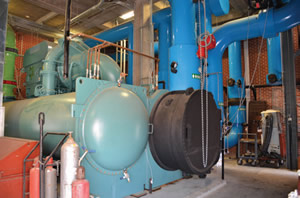
Baylor saved more than $460,000 (about 24 percent of electricity costs), 5.8 million kilowatt-hours, and 8.6 million pounds of CO2 with Optimum Energy.
Baylor University in Waco, TX, had a typical chiller plant—it ran well, but it was a hodgepodge of equipment and it was managed manually. Operators judged once per shift when to add or shed electricity load based on demand. That imprecise, inconsistent process made the plant inefficient.
Kenneth Haltom, who manages Baylor’s energy services through a partnership with Aramark, and his team suspected that chiller plant optimization would be the best way to increase efficiency and reduce energy costs. There was good savings potential: the eight-chiller plant, which cools 4.9 million square feet of space 365 days a year, was using 32 million kWh of electricity annually.
The team brought in Optimum Energy to assess the opportunity, and found their hypothesis was right. Optimum installed its OptimumLOOP software and OptiCx platform. The closed-loop optimization solution reads data every 30 seconds and dynamically adjusts plant equipment in real time in response to changing conditions. The software determines the best operating conditions across the plant and makes on-the-fly changes to all eight chillers, water pumps and cooling tower equipment.
“OptimumLOOP made everything automatic, from slightly adjusting a single valve to improve water flow, to shedding entire machines from the system when demand decreases,” explains Haltom. “Each chiller operates at a different output and rate, depending on what gives us the greatest efficiency.”
In the first year of operation, plant efficiency went from 0.897 kW/ton to 0.681 kW/ton. Baylor saved more than $460,000 (about 24 percent of electricity costs), 5.8 million kilowatt-hours and 8.6 million pounds of CO2. Also, air-conditioned spaces became more comfortable, and chiller equipment is now easier to maintain.
“Chiller optimization offered us the biggest bang for the buck,” says Haltom. “The product from the chiller plant is better, more consistent, and it’s now based on real-time load rather than operator guesses.”
www.optimumenergyco.com
This article originally appeared in the College Planning & Management February 2018 issue of Spaces4Learning.