Cleveland State University
Project Snapshot
PROJECT: Campus Sustainability
INSTITUTION: Cleveland State University
LOCATION: Cleveland, OH
COMPANY NAME: Polaris Industries
WEBSITE: GEMcar.com

At Ohio’s Cleveland State University, students, faculty, and staff are working together to create a greener campus and a more sustainable future. Their efforts include integrating Polaris GEM vehicles into their maintenance fleet.
THE CHALLENGE
Sustainability has become an important topic across the world as resources become increasingly stressed by population growth, pollution, and environmental strains born from climate change. Colleges and universities are taking global leadership roles by promoting sustainability on their campuses.
Cleveland State University (CSU) is one such campus, and their efforts have earned them a number of awards including a Silver rating from STARS (Sustainability Tracking, Assessment & Rating System) a program of AASHE (Association for the Advancement for Sustainability in Higher Education).
“CSU is committed to pursuing sustainable goals in all areas of the university,” says Jennifer McMillin, director of sustainability at CSU. “We’re proud to have received a Silver rating. It’s one more way to show the progress we’ve made in making our campus and community a better place to live and work.”
THE SOLUTION
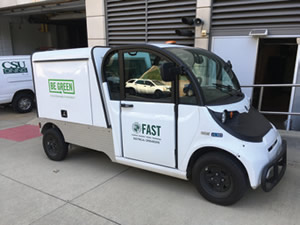 Cleveland State University was looking for sustainable transportation options to support their maintenance and service departments. They turned to zero-emission Polaris GEM vehicles. The vehicle had to be electric to fit into their campus sustainability plan but they also needed a vehicle that could be configured to meet the needs of their electrical maintenance crews and on-campus job requirements.
“We knew we wanted an electric utility vehicle, and we chose the GEM eL XD because of the number of configurations offered,” says David Pekala, crew leader for CSU’s Electrical Maintenance department. “We were able to customize the machine to fit our needs, adding a 44-inch cab L-Box to protect cargo.”
On a campus where 30 percent of annual campus electricity is generated by renewable sources, the combination of CSU’s commitment to green power and all-electric vehicles work together to lower greenhouse gases and other airborne pollutants created by fossil fuels. Not only does GEM’s performance impact the environment, it is fiscally sustainable as well. Electric vehicles have lower operating and maintenance costs than their combustion counterparts. GEM’s purchase price is also thousands lower than competing trucks and vans.
IMPACT ON LEARNING
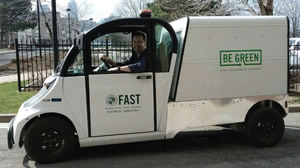 By creating a sustainable campus, CSU leaders are changing the educational climate at the school. By putting science to work and teaching by example, they’re enhancing the school, and investing in the long-term success of their students, the community, and the world. Decreasing their footprint on the planet is fiscally responsible and positively impacts the environment.
Editor’s Review
A campus with hundreds of acres of property and a commitment to sustainability—often cited by students as a determining factor in their selection of a college or university—is wise to invest in electric vehicles for its maintenance fleet. Savings are realized, carbon emissions are reduced, students are provided with a visual affirmation of the administration’s commitment to sustainability, and facilities staff have the tools they need to maintain a healthy campus for all.
This article originally appeared in the College Planning & Management March 2018 issue of Spaces4Learning.