Integrated Sciences Center Breaks Ground at Lafayette College

Lafayette College in Easton, PA, recently unveiled plans for their new Rockwell Integrated Sciences Center. The new building will house students pursuing various scientific disciplines, including biology, computer science, neuroscience, and other sciences.
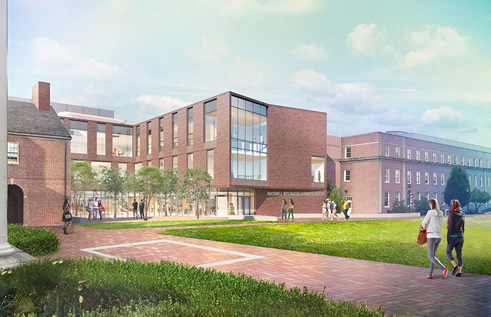
Lafayette College

The new innovative space, the largest capital project in the school’s history, will focus on creating spaces that can adapt to new technology, and bring students from different disciplines together. It will also include the college’s IDEAL Center for Innovation and Entrepreneurship.

 The building design was handled by Boston firm Payette and The Harman Group, and the project is targeting LEED Gold certification with a projected completion date in the fall of 2019.

Featured

  • Different Starting Points, Same End Goal

    Higher education campuses can enhance student experience by implementing mobile credentials to streamline building access, on-campus payments, and access to other amenities. This enables students to connect to their campuses through the technology they use most: their mobile devices.

  • University of Illinois Moves Forward with College Sports’ Largest Digital Scoreboard

    The University of Illinois in Champaign, Ill., recently announced a series of upgrades to Gies Memorial Stadium that will include the largest scoreboard in college sports, according to a news release.

  • University of Kentucky Receives $150M Gift Toward New Arts District

    The University of Kentucky’s Board of Trustees recently received a $150-million gift from The Bill Gatton Foundation, according to a university news release, to build a new arts district on the campus in Lexington, Ky. The new district will feature a new College of Fine Arts building and a multi-hundred-seat theater, among other amenities.

  • Preparing for the Next Era of Healthcare Education, Innovation

    Across the country, public universities and community colleges are accelerating investments in healthcare education facilities as part of a broader strategy to address workforce shortages, modernize outdated infrastructure, and expand clinical training capacity. These projects, which are often located at the center of campus health and science districts, are no longer limited to traditional classrooms.