Designs Unveiled for Ohio High School

Designs for the new Fremont Ross High School in Fremont, Ohio were unveiled recently for public viewing. The new facility, designed by TDA Architecture, and is slated to feature 29 classrooms, along with a student resource office station and a prominent entry corridor.
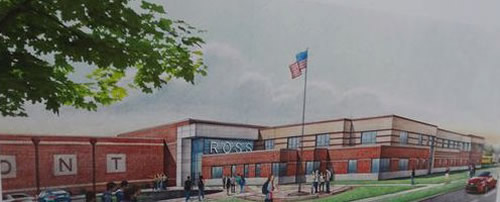
Fremont Ross High School

The new school is one of many proposed upgrades/new constructions in the district. The design and development phase of the project will be completed by September of 2018, with a final completion date of 2021. The current high school facility will remain open during design and construction, and be demolished following the opening of the new high school.

Featured

  • Utah Valley University Opens New Engineering Building

    Utah Valley University in Orem, Utah, recently held a grand-opening ceremony for the new Scott M. Smith Engineering Building, according to a news release. The facility is one of the largest engineering buildings in the state at almost 200,000 square feet, and it plays home to the university’s Smith College of Engineering and Technology (SCET).

  • sapling sprouting from a cracked stone

    Lessons in Resilience: Disaster Recovery in Our Schools

    Facility managers play a pivotal role in how well a school weathers and recovers from a crisis. Whether it's a hurricane, a flood, a tornado, or a man-made event, preparation determines resilience.

  • DLR Group Appoints New K–12 Education Practice Leader

    Integrated design firm DLR Group recently announced that it has named its new global K–12 Education leader, Senior Principal Carmen Wyckoff, AIA, LEED AP, according to a news release. Her teams have members in all 36 of the firm’s offices in the U.S., Puerto Rico, the U.S. Virgin Islands, Europe, and Asia.

  • Different Starting Points, Same End Goal

    Higher education campuses can enhance student experience by implementing mobile credentials to streamline building access, on-campus payments, and access to other amenities. This enables students to connect to their campuses through the technology they use most: their mobile devices.

Digital Edition