Residence Facility Takes Shape at Mercer University

Construction started recently on the Lofts at Mercer Landing (the Lofts)—a mixed-use student residence at Mercer University in Macon, GA. The new residence facility will add 306 beds to Mercer’s housing stock and will accommodate students who are part of the growing university.
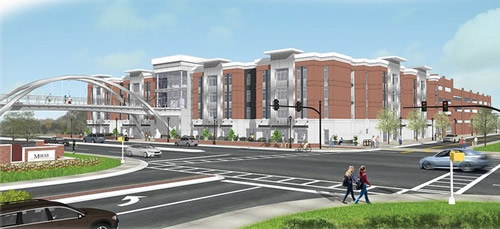
Lofts at Mercer Landing

Along with student housing, the Lofts is designed to feature a 316-car parking area, which will help create more spaces for commuting students. Sierra Development and SPP Commercial Group are handling design and development for the Lofts project. Construction for the project will be completed in August of 2019.

Featured

  • Minnesota Middle School Finishes $23.5M Addition and Modernization

    Highland Park Middle School in St. Paul, Minn., recently announced the completion of a $23.5-million addition and remodel project, according to a news release. Saint Paul Public Schools partnered with ATS&R Planners, Architects & Engineers for its design and Kraus-Anderson for its construction.

  • Countway Library at Harvard Medical School

    From Shadows to Sanctuary: The Transformation of Light at Countway Library

    The renovation of Countway Library at Harvard Medical School demonstrates how biophilic design and advanced lighting strategies transformed a formerly dark, insular space into a vibrant, welcoming hub that supports wellness, learning, and community engagement.

  • Rhode Island Boarding School Completes Student Dorm Renovations

    St. George’s School in Middletown, R.I., recently announced the completion of a $26-million renovation project on Arden-Diman-Eccles Dormitory, according to a news release. The school partnered with Voith & Mactavish Architects (VMA) on the new space, which places a new focus on collaborative community spaces open to both boarding students and day students.

  • Pitzer College

    Designing for Change in Higher Ed Learning Environments

    Higher education will continue to evolve, and learning environments must evolve with it. By prioritizing adaptable infrastructure, thoughtful reuse, strong energy performance, and wellness-centered design, campuses can create spaces that support learning today while remaining flexible for the future.