Edison State Breaks Ground on Student Career Center

Edison State Community College in Piqua, OH, recently broke ground in preparation for the construction of the Robinson Student Career Center. The new facility will allow students to work with local business and industry leaders as part of their Edison State education. The Center will be constructed as an addition to the West Hall building of the college.
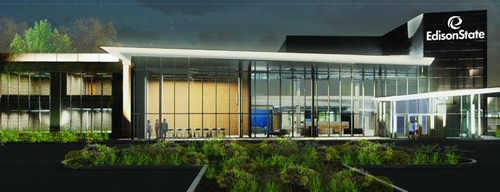
Edison State

Construction on the Robinson Student Career Center is planned to begin in the 2018 academic year, with a projected completion date sometime in the fall of 2019.

Featured

  • Montclair State University Debuts New VR Facility

    Montclair State University in Montclair, N.J., recently announced the completion of a new virtual reality learning facility developed in partnership with Dreamscape Learn, according to a news release. The 2,450-square-foot lab space is inside the College of Communication and Media building and will serve students pursuing careers in digital media, virtual reality, and content creation.

  • S4L Announces 2026 Education Design Showcase Winners

    Spaces4Learning is thrilled to announce the winners of the 2026 Education Design Showcase! Now in its 27th year, the annual awards program honors innovative solutions in planning, design, architecture, and construction across K–12 and higher education.

  • New Jersey Day School Opens New Science & Entrepreneurship Building

    Saddle River Day School (SRDS) in Saddle River, N.J., recently celebrated the grand opening of the new Dr. Kristen Walsh Hall of Science & Entrepreneurship, according to a news release. The school partnered with DIG Architecture on the 32,000 square foot facility, completed on a 17-month construction timeline in time for the beginning of the new school year.

  • Planning with Clarity: Using AI to Make Better Campus Decisions, Not Just Better Designs

    Higher education leaders are being asked to make increasingly high-stakes decisions about campus facilities amid greater uncertainty than ever before. Social and economic pressures, shifting enrollment, and evolving learning models compete with growing deferred maintenance needs to strain even the most robust infrastructure budgets.