Randolph Community College Celebrates Ground Breaking

Randolph Community College in Asheboro, NC, recently celebrated a ground breaking for its new Allied Health Center. The 45,000-square-foot building will feature a “simulated healthcare community.” Randolph’s Associate Degree Nursing, Radiography, Medical Assisting, and Emergency Medical Services programs will all call the new building home.
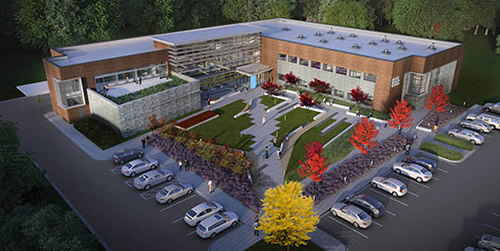
Randolph College Allied Health

The facility will feature exam rooms, a surgical room, an ICU room, and a maternity room. There will also be simulated waiting areas for ER students and a simulated apartment for EMT students to practice in.

Instructors will be able to use the new space to evaluate student performance during and after simulated incidents. The Allied Health Center is expected to be a cornerstone in the community and provide graduates for high-demand healthcare jobs in the region.

Featured

  • Spaces4Learning Trends & Predictions for Educational Facilities in 2026: Part I

    We asked, you answered, and the results are in! Last year, we put out a call for submissions to collect our readership’s opinion on trends and predictions for K–12 and higher education facilities in 2026.

  • blurry image capturing students navigating crowded hallways between classes

    How Human Behavior Data Is Reshaping Campus Facilities Management

    The ebb and flow of students, faculty, and administrators across a campus have a larger impact on maintenance, cleaning, and sustainability than many realize.

  • Indiana Wesleyan University Schedules Grand Opening for New Welcome Center

    Indiana Wesleyan University recently announced that it will soon open a new Welcome Center on its campus in Marion, Ind., according to a news release. The facility will serve as the home base for prospective students and their families to learn more about the university and student life there. A ribbon-cutting ceremony is scheduled for February 19.

  • Preparing for the Next Era of Healthcare Education, Innovation

    Across the country, public universities and community colleges are accelerating investments in healthcare education facilities as part of a broader strategy to address workforce shortages, modernize outdated infrastructure, and expand clinical training capacity. These projects, which are often located at the center of campus health and science districts, are no longer limited to traditional classrooms.

Digital Edition