Randolph Community College Celebrates Ground Breaking

Randolph Community College in Asheboro, NC, recently celebrated a ground breaking for its new Allied Health Center. The 45,000-square-foot building will feature a “simulated healthcare community.” Randolph’s Associate Degree Nursing, Radiography, Medical Assisting, and Emergency Medical Services programs will all call the new building home.
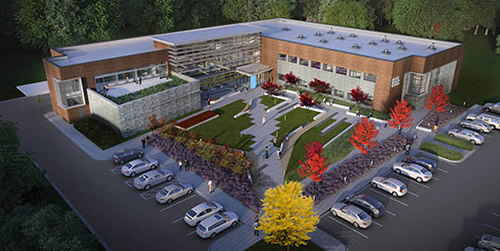
Randolph College Allied Health

The facility will feature exam rooms, a surgical room, an ICU room, and a maternity room. There will also be simulated waiting areas for ER students and a simulated apartment for EMT students to practice in.

Instructors will be able to use the new space to evaluate student performance during and after simulated incidents. The Allied Health Center is expected to be a cornerstone in the community and provide graduates for high-demand healthcare jobs in the region.

Featured

  • Indiana University Launches Capital Campus in D.C.

    Indiana University recently held a ribbon-cutting ceremony for the new IU Capital Campus in Washington, D.C., according to university news. The eight-story facility will provide a central hub for the university’s existing programs and business operations based in D.C., uniting them under one roof and providing the opportunity to expand.

  • Classical building columns display digital data streams

    The Campus Nervous System: Why Facilities Risk Is Now a Leadership Issue in Higher Education

    Facility performance now intersects with safety, compliance, on-campus experience, institutional reputation, and financial resilience. That places it firmly on the leadership agenda.

  • California High School Opens New Classroom Building for 7th-, 8th-Graders

    Santa Rosa City Schools in Santa Rosa, Calif., recently announced the completion of a new classroom building for Piner High School. As the campus transitions to a Junior/Senior High School, the facility will play home to the school’s new population of seventh- and eighth-grade students.

  • Designing for Every Mind

    Learning environments have the power to shape not just what students know, but who they become. When a school is designed with genuine empathy—for the full range of ways students think, sense, and engage with the world—it becomes more than a building. It becomes a catalyst for growth, confidence, and belonging. That is the animating idea behind neurodiverse design, and it is one that is transforming how more architects and designers are thinking about school design.