New Technical Campus for Collin College

Officials broke ground earlier this month on the Collin College Technical Campus in Collin County, TX, a 340,000-square-foot career and technical education facility dedicated to instruction in high-demand, high-wage workforce areas.
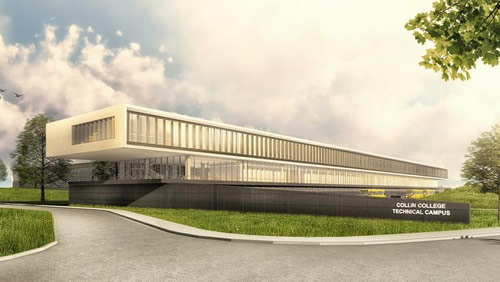
Collin College Workforce

Scheduled for a fall 2020 opening, the three-story campus will offer programs in automotive service and repair, construction, health care, information technology and manufacturing, as well as general academic classes, student support services, green spaces, cooperative project areas and covered parking. It will serve up to 7,100 students.

Designed with the input of local professionals in each program’s career field, the campus will prepare students to enter the job market with current training on the equipment they will use in their industry.

Featured

  • Can AI Help Build Stronger Communities in Student Housing?

    Student housing success is shifting from operational performance to student experience, with belonging now at the center. A recent 2025 report underscores a growing emphasis on student well-being, community, and engagement, signaling that expectations now extend beyond logistics to ensure students feel supported in their living environments. AI is enabling that shift by reducing administrative workload and giving teams more time to focus on meaningful student engagement.

  • Higher Ed is Betting on New Buildings While Quietly Undermining Their Campuses — Here’s Why

    In this climate, the owner’s representative has changed from a delivery-focused advisor to a strategic campus partner. Institutions are increasingly relying on owner’s reps not just to manage, cope, schedule, and budget, but also help evaluate whether a project should proceed at all.

  • Spaces4Learning Launches 2026 Facilities and Construction Brief Survey

    Spaces4Learning recently launched the 2026 Facilities and Construction Brief Survey, which collects data on the previous year’s K–12 and higher education construction projects nationwide.

  • Designing for Every Mind

    Learning environments have the power to shape not just what students know, but who they become. When a school is designed with genuine empathy—for the full range of ways students think, sense, and engage with the world—it becomes more than a building. It becomes a catalyst for growth, confidence, and belonging. That is the animating idea behind neurodiverse design, and it is one that is transforming how more architects and designers are thinking about school design.