University of New Haven Breaks Ground on Signature Academic Building

The University of New Haven has broken ground on a signature new academic building in the heart of its New Haven, CT, campus. The three-floor, 44,000-square-foot building will feature cutting-edge engineering and science labs, a makerspace, an atrium/café, collaborative classrooms, a 3D visualization technology suite, space for multidisciplinary student and faculty collaboration, and state-of-the-art communication studios, bringing students together across fields of study.
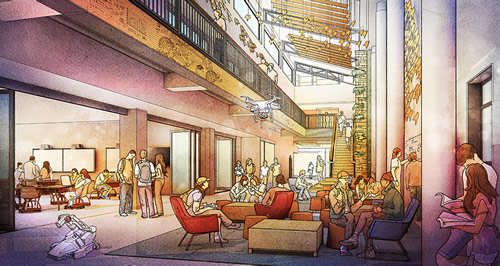
University of New Haven Bergami Center for Science, Technology, and Innovation

Scheduled to open in the fall of 2019, the Bergami Center for Science, Technology, and Innovation is the cornerstone of The Charger Challenge, the University's comprehensive $100 millionfundraising campaign that will culminate with its Centennial in 2020.

Featured

  • S4L Announces 2026 Education Design Showcase Winners

    Spaces4Learning is thrilled to announce the winners of the 2026 Education Design Showcase! Now in its 27th year, the annual awards program honors innovative solutions in planning, design, architecture, and construction across K–12 and higher education.

  • Quattrocchi Kwok Architects Opens New Office in Denver

    Education planning and design firm Quattrocchi Kwok Architects (QKA) recently announced that it has opened a new office in Denver, Colo., the firm’s third overall. QKA is headquartered in Santa Rosa, Calif., and runs an East Bay Area office in Oakland.

  • Barbara Vick Western Branch

    Barbara Vick Western Branch

    Established in 1999, the Education Design Showcase is a vehicle for showing off innovative — yet practical — solutions in planning, design, architecture, and construction. The Barbara Vick Western Branch has been recognized with an EDS 2026 Grand Prize award in the category of Renovation.

  • Universities Continue to Launch Multimillion-Dollar Campus Transformations

    What makes the current wave of campus development especially noteworthy is its emphasis on multi-use functionality and community integration. Institutions are no longer investing solely in academic or athletic facilities in isolation. Instead, they are creating destinations that blend recreation, health, housing, and event-driven economic activity.