Penn State Meets Sustainability Goals
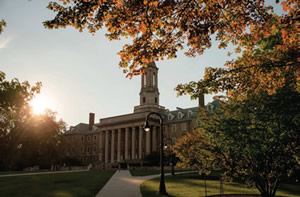
Penn State campuses use GEM vehicles to achieve sustainability.
As sustainability initiatives on college campuses continue to evolve, vehicles with sustainable power sources, street-legal status, and small vehicle footprints provide a flexible solution to meet campus transportation and maintenance needs. Pennsylvania State University is no exception. Across its vast campus, Penn State relies on GEM to transport passengers, haul equipment, and assist with landscape management.
According to Bruce Cifelli, Penn State’s equipment management and services administrator, finding an electric vehicle with long battery life was key. Anything less than eight hours a day simply wouldn’t provide enough range to get the job done. GEM’s array of battery options gave Penn State the ability to select a battery system that does just that, without wasting time to charge up.
Penn State needed a vehicle with features much more comparable to an automotive truck. GEM’s design flexibility enabled Penn State to pick and choose the extra features it required—truck-backs, flat beds, and ladder racks—to match a variety of different campus uses. While still street legal, GEM’s compact footprint allows users to easily maneuver where large trucks cannot.
In the business of campus maintenance, time is money. Vehicles must be at peak performance to maintain efficiency and get jobs done. Since adding GEM to their fleet of utility vehicles, Cifelli says his team has already noticed a difference in reliability, and downtime has been reduced. These time and cost savings go directly to the bottom line and give a lower total cost of ownership than trucks.
GEM is a testament to the practicality of a low speed, street legal, electric option. Its perfect mix of versatility and power helps Penn State achieve its sustainability goals, without increasing budget requirements or sacrificing productivity—all while ensuring campus is running smoothly.
gem.polaris.com
This article originally appeared in the College Planning & Management October 2018 issue of Spaces4Learning.