A Solution for Leaky Ductwork
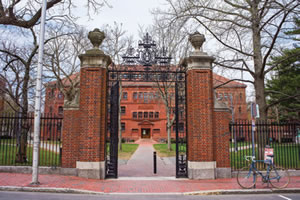
Harvard University

Leaky ductwork connected to a new air handling unit in Girguis Lab at Harvard University was fixed with a new approach to duct sealing.

At Harvard University’s Girguis Lab, engineers had just installed a new 8,500 CFM air handling unit that was meant to supply heat to the lab and an adjacent facility. When the unit was brought online, however, its fan was operating at around 97 percent of capacity with little effect—and that was even before the system was connected to the adjacent facility. It was determined that leaks in the ductwork were reducing static pressure to such a degree that air couldn’t reach its destinations. With ducts hidden under insulation and behind layers of pipes, fixing those leaks seemed an impossible task.

Fortunately, the mechanical contractors on the job had heard about a new approach to duct sealing called Aeroseal that worked from the inside of the air shafts to locate and seal leaks.

In just a matter of days, the problem was fixed. The system’s duct leaks were quickly reduced from more than 5,800 CFM down to 429 CFM—a 98-percent reduction. The AHR fan now operated at only 37 percent of capacity. The system was quieter, and university engineers were relieved.

“I would absolutely call this a project saver,” says John Holliser, senior capital project manager for Harvard. “Our only other option was to tear down walls and demolish the building structure in order to access the leaky ductwork. We were very pleased with the results and I honestly don’t know how we would have solved this issue if the Aeroseal technology wasn’t available.”

aeroseal.com

This article originally appeared in the College Planning & Management July/August 2019 issue of Spaces4Learning.

Featured

  • Chartwells Launches Campus Dining Evaluation Framework

    Contract food-service management provider Chartwells Higher Education recently announced the launch of BLUEPRINT, according to a news release. The evaluation framework was designed to provide a data-driven and customizable roadmap towards optimizing campus dining services and, by extension, the student experience.

  • school building with glowing circuit board patterns

    AI Is Coming to Schools — But Most School Buildings Still Run on Institutional Memory

    As school districts race to introduce AI into classrooms, administration, and curriculum planning, another conversation is happening behind the scenes: How prepared are school facilities themselves for the operational demands AI will create?

  • Rethinking K-12 Schools as a Continuous Learning Experience

    Most students move through three or more separate facilities during their K-12 journey, yet the built environments they encounter at each stage have traditionally been designed in isolation, with little continuity in spatial language, learning philosophy, or physical resources. Each new school is a reset with different layouts, learning models, expectations, and ways of moving through a building. The next generation of school design is making the case that the first day of kindergarten and the last day of high school can and should feel connected through common support systems and infrastructure in the physical environment.

  • Minnesota District Converts Middle School into Community Hub

    White Bear Lake Area Schools in White Bear Lake, Minn., recently announced the end of a major renovation project that converted a former middle school into a new centralized district and community hub, according to a news release.