Central Piedmont Community College Opens New Building

CHARLOTTE, NC – Central Piedmont Community College has announced that its new Harper IV building, located on its Harper Campus, is open and ready to welcome students in time for the fall semester.
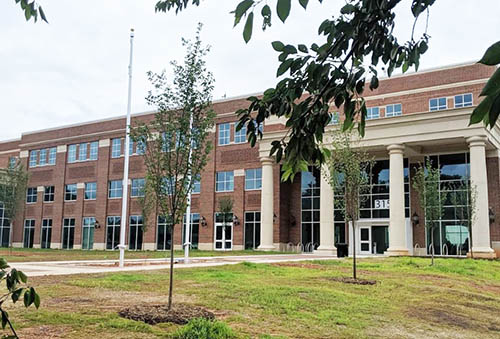
Central Piedmont CC Harper Campus

The new 84,357-square-foot facility features:
  • A new campus library with computer classroom
  • A Student Commons with lounge areas, bookstore, food service, and student government spaces
  • Construction trades classrooms and labs for architectural technology, electrical, plumbing, and welding
  • General and computer classrooms
  • Science labs
  • Developmental reading and math labs
  • Student services suite
  • Student study areas
  • Faculty offices

The new structure expands Central Piedmont's footprint in southwest Charlotte, helping the college better respond to the educational and workforce training needs of Mecklenburg County's residents and business community.

Featured

  • UT System Approves First Funds for New Campus

    The University of Texas System Board of Regents recently approved funds to build the first facility of a new campus in far west Fort Worth, Texas, according to university news. UTA West will serve as a branch of the University of Texas at Arlington and is scheduled to open in fall 2028.

  • College of the Desert Hits Construction Milestone on New Campus

    College of the Desert recently announced that the construction of its new Palm Springs Campus in Palm Springs, Calif., recently reached a major construction milestone, according to a news release. The college is partnering with general contractor C.W. Driver Companies, which recently “topped out” the facility by placing the final beam in its structure.

  • ed tech conference calendar

    Upcoming Awards, Events & Webinars

  • Niles West High School Natatorium Renovation

    Natatoriums are highly specialized spaces, and luminaires in this setting face several unique challenges. Perhaps the most significant is corrosion, which is exacerbated by high indoor humidity, condensation, and pool chemicals, often resulting in material degradation in luminaires not certified to perform in corrosive environments.