Englewood STEM High School Debuts After Four School Closures

Englewood STEM High School in Chicago is open this week after the district closed down four high schools due to lack of academic achievement and under enrollment of students. Over the past decade the schools — Hope, Harper, TEAM and Robeson — experienced a 70%-85% declines in student enrollment, reported the Chicago Tribune.
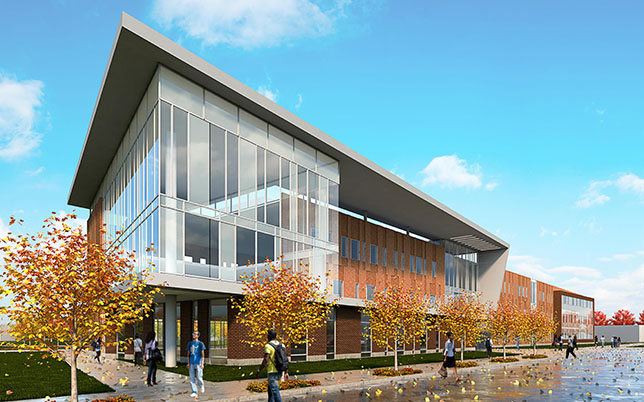
The $85 million neighborhood school is brightly lit, with lots of windows and features colorful murals and inspirational words on the walls that integrates STEM symbols with traditional West African art patterns.

The new three-story building was built on the grounds of the former Robeson campus which closed in 2018. More than 400 students are registered to start the school year and nearly all students are African American. In addition, 88% of students are low-income and 22% are “diverse learners,” meaning they have different learning needs.

The $85 million neighborhood school is brightly lit, with lots of windows and features colorful murals and inspirational words on the walls that integrates STEM symbols with traditional West African art patterns.  

“One of the things that we were really adamant about was the power of images, and how images play in how people see themselves,” Principal Conrad Timbers-Ausar told the Chicago Sun-Times. “There’s some images that we wanted to have as students and families come to the school that they can see themselves doing different things throughout the building.”

Englewood STEM, which is the first new school to be built since the 1970s in the neighborhood, has an on-site health clinic on the first floor that’s open to students, staff and the community. Chicago Public Schools calls the classrooms in the high school as “world-class multipurpose educational spaces” where students will focus on science, technology, engineering and math. The gym/auditorium seats about 800 and the grounds feature an athletic facility with a baseball diamond and football field.

The school’s mascot is the panthers, which was chosen by community vote and inspired by the blockbuster film “Black Panther.”

About the Author

Yvonne Marquez is senior editor of Spaces4Learning. She can be reached at [email protected].

Featured

  • TCU Marks Campus Expansion Milestone

    Texas Christian University in Fort Worth, Texas, recently held a topping-out ceremony to mark progress on a major campus expansion effort including four new residential facilities and a five-story parking garage, according to a news release.

  • Rethinking K-12 Schools as a Continuous Learning Experience

    Most students move through three or more separate facilities during their K-12 journey, yet the built environments they encounter at each stage have traditionally been designed in isolation, with little continuity in spatial language, learning philosophy, or physical resources. Each new school is a reset with different layouts, learning models, expectations, and ways of moving through a building. The next generation of school design is making the case that the first day of kindergarten and the last day of high school can and should feel connected through common support systems and infrastructure in the physical environment.

  • Q&A: How to Prevent Kitchen Grease Fires in Commercial Kitchens

    School cafeterias and university dining halls serve thousands of meals daily, relying on high-heat equipment like fryers, grills, and ovens. While these operations keep students fed, they also generate significant grease-laden vapors. Without proper controls, this grease becomes a silent fire threat. As a certified exhaust cleaning specialist and business coach who has helped hundreds of institutional facilities achieve NFPA 96 compliance, I emphasize that proactive grease management isn’t optional; it’s a core fire/life safety practice.

  • Designing Third Spaces That Do What AI Can't

    In 2026, education is evolving faster than ever. With AI reshaping everything from lesson planning to personalized instruction, schools and universities are turning their attention to what AI can’t replicate: spaces that foster collaboration, community, and creativity.