University of Arkansas Civil Engineering Research Center Breaks Ground
FAYETTEVILLE, AR –Leaders from across Arkansas gathered in early November to celebrate the groundbreaking of the University of Arkansas’ Civil Engineering Research and Education Center at the Arkansas Research and Technology Park. Known as CEREC, the 37,400-square-foot, $13.8-million facility will serve as a research and teaching space for the Department of Civil Engineering and will be a resource for academic, government, and industrial partners across Arkansas.
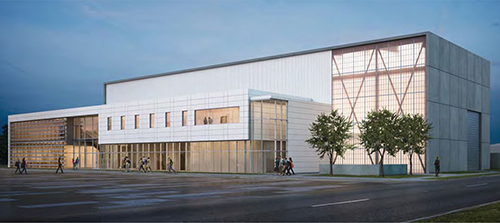
The space includes a high-bay structural testing facility with a four-foot thick “strong-floor” capable of testing large-scale structural systems and components. It will also house a 25-ton rail crane to move heavy materials.
The facility will be the first of its kind in Arkansas. Currently, large-scale structural components must be sent out of state for testing. CEREC will allow academic, industry, and government researchers to conduct cutting-edge experimental research in-state.CEREC will also serve as a living laboratory for several hundred students annually, and the facility has space for 15 faculty members to conduct research.
The project is expected to be complete in spring 2021, with the first classes set to start in the fall of that year.