University of Louisiana Monroe Installs Active Learning Classroom
The University of Louisiana Monroe has partnered with Trox, an education technology solutions company, to install a state-of-the-art active learning classroom for its College of Pharmacy. The classroom is the first of its kind in the state, and it provides opportunities for more active participation, interaction, and collaboration among teachers and students.
The classroom seats up to 84 students at 14 collaboration tables, each outfitted with integrated collaboration and AV technology. Each table has a Wolfvision vSolution Matrix Multi-Screen that lets students and professors wirelessly share notes, presentations, activities, and other documents from any smartphone, laptop, or tablet. The collaboration tables also have displays, microphones, and a Cynap Core wireless presentation system. The classroom itself is also set up with a camera to allow remote students to seamlessly follow along.
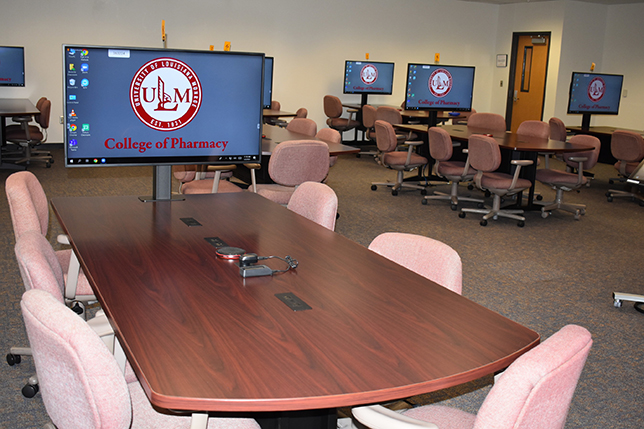
“Student-centered, technology-rich classrooms are the future of higher education,” said University of Louisiana Monroe’s Classrooms & AV Coordinator, Greg Andrews. “The University of Louisiana’s first active learning classroom will give students more exposure to real-world experiences. Trox’s expertise in the understanding of how to use technology to improve learning environments helped us create a space that fosters better communication and collaboration between teachers and their students—whether they are remote, in the classroom, or a blend of both.”
This project isn’t the first partnership between Trox and the university. Trox has supplied the campus with AV solutions and other educational technologies for more than 20 years—including converting the unused library into a new technology center with a biology lab, smart classrooms, and more.
“The installation of its new active learning classroom is a great example of how the university is leveraging modern education technology to create cutting-edge learning environments for its students and teachers,” said Mike Logan, Regional Vice President at Trox. “We are honored to partner with the University of Louisiana Monroe College of Pharmacy on this transformational project.”
About the Author
Matt Jones is senior editor of Spaces4Learning. He can be reached at [email protected].