VIVOTEK Releases Update to VAST 2 IP Video Management Software
IP surveillance solutions provider VIVOTEK has released an update to its VAST 2 IP Video Management Software.
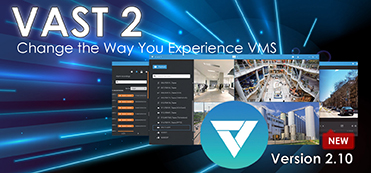
The new version, 2.10, adds features including an embedded web browser on the view cell, an added watch list for easy management, evidence image of license plate recognition (LPR) cameras, and an access control solution.
“VIVOTEK’s VAST 2 is an easy-to-use IP Video Management Software solution,” said David Liu, President of VIVOTEK USA, Inc. “It comes with exciting advancements, such as easy operation on single or multiple monitors, custom layout to accommodate both corridor and panorama orientations, rapid export of multichannel video, and the acquisition of VCA analytics and cybersecurity attack events from VIVOTEK cameras and substations in a hierarchal system structure.”
VIVOTEK was founded in 2000 in Taiwan. It has offices and subsidiaries in the United States, Europe, India, the Middle East, Latin America, and Japan. It partners with more than 180 distributors in 116 countries.
About the Author
Matt Jones is senior editor of Spaces4Learning. He can be reached at [email protected].