U Georgia to Name Two Buildings after Distinguished Black Graduates
- By Dian Schaffhauser
- 12/08/21
Days after the Board of Regents for the University System of Georgia declined to rename dozens of colleges and buildings carrying names of historic figures who supported slavery and racial segregation, the University of Georgia recommended renaming two facilities on its campus for some of the university's earliest and most distinguished African American graduates.
At the request of President Jere Morehead, the university cabinet voted unanimously to rename the Science Library to the Shirley Mathis McBay Science Library, in memory of Shirley Mathis McBay, the first African American to earn a doctorate from UGA; and a new residence hall in honor of the first African American students to enroll as freshmen and earn their undergraduate degrees. The namings were subject to approval by the Board of Regents.
McBay earned a doctorate in math from the university in 1966, after earning master's degrees in math and chemistry from Atlanta University (now Clark Atlanta University). After serving at Spelman College as a math professor, McBay became MIT's dean for student affairs and chair of the National Science Foundation's committee on equal opportunity in science and engineering. McBay was an early champion of the need for diversity in the STEM fields, founding the Quality Education for Minorities Network (QEM), a nonprofit that she led for two decades. She died on Nov. 27, 2021, at the age of 86.
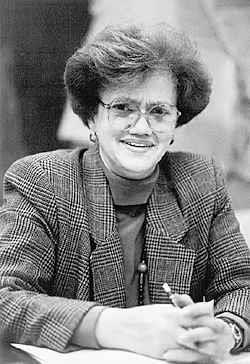
The late Shirley M. McBay, who served at Spelman College and MIT, was founder of the Quality Education for Minorities Network. Source: Spelman College
The name of the university’s newest residence hall will honor three distinguished graduates: Harold Black, Mary Blackwell Diallo and Kerry Rushin Miller.
Black was the University's first African American male freshman and the first African American graduate of the Terry College of Business. He retired as professor emeritus of the University of Tennessee-Knoxville after 24 years of service, as a professor of finance. Through the years, Black served on the faculties of American University, Howard University, the University of North Carolina and the University of Florida.
Diallo was the first African American student from Athens to enroll in the University of Georgia. She earned both her bachelor's and master's degrees in French literature from UGA and her doctorate from Emory University. She taught at Morehouse College and Florida A&M University (FAMU), from which she retired earlier this year.
Miller was the first African American to earn a bachelor's degree from the University of Georgia in mathematics in 1966 and shortly thereafter began an extensive professional career in the telecommunications industry. She retired from BellSouth after 29 years, primarily based in Charlotte, N.C. As a later member of the Charlotte Club of the National Association of Negro Business and Professional Women's Clubs (NANBPWC), Miller developed an education program designed to help at-risk elementary and middle school students raise their self-esteem, strive for excellence and achieve their personal best.
Black-Diallo-Miller Hall will house 525 first-year students in double occupancy rooms beginning in fall 2022, the 60th anniversary of the year that Black, Diallo and Miller enrolled as freshmen. Construction of the five-story, $50 million project began in December 2020.
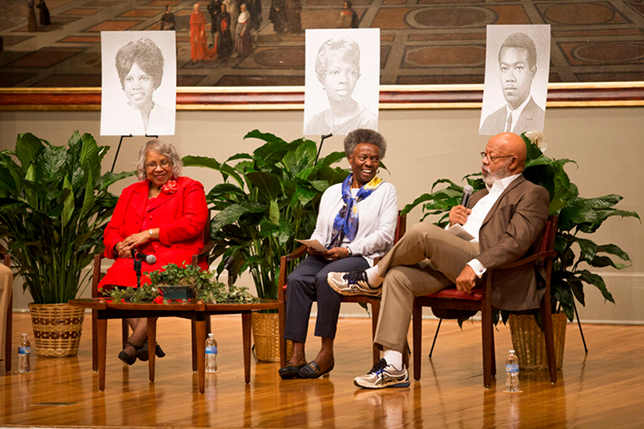
University of Georgia alumni (L to R) Kerry Rushin Miller, Mary Blackwell Diallo, and Harold Black, take part in a conversation on stage, titled "Conversations with the Class of 1966: UGA's First Black Freshman Graduates," in 2017 in the UGA Chapel. Source: University of Georgia
"It is a privilege to recognize the incredible contributions of these individuals," said Michelle Cook, vice provost for diversity and inclusion and strategic university initiatives, in a statement. "They were instrumental in paving the way for so many who have come behind them, and these namings will ensure that their stories are forever a part of our institution's history."
"Through these namings, we acknowledge the importance of these pioneers in the history of our institution," added President Jere Morehead. "We celebrate their remarkable achievements and recognize the profoundly positive, lasting impact they have made on the University of Georgia."
In late November, the Board of Regents for the System rejected the guidance of an advisory board, suggesting that the eradicating those names from 75 in the system buildings would also erase the instructional value of history. "History can teach us important lessons, lessons that if understood and applied make Georgia and its people stronger," the board noted in a statement.
The board added, "We acknowledge, understand and respect there are many viewpoints on this matter. Going forward, the Board is committed to naming actions that reflect the strength and energy of Georgia's diversity."
About the Author
Dian Schaffhauser is a former senior contributing editor for 1105 Media's education publications THE Journal, Campus Technology and Spaces4Learning.