Essential Springtime HVAC Upgrades for K–12 Schools
By Kirk Rizzolla
Spring is a wonderful time of year. The days are longer, the weather begins to warm up, and everything is in bloom. However, for many people, this also means seasonal allergies will set in. The Centers for Disease Control and Prevention estimates that approximately 25% of adults and about 20% of children will suffer from seasonal allergies.
Environmental allergens can also be a major trigger for pediatric asthma, according to the National Institute of Health. In addition, school settings are a major source of significant allergen encounters.
For aging HVAC systems, these springtime changes can bring challenges for K–12 school facility managers when it comes to maintaining comfortable indoor air quality (IAQ) in classrooms. If units do not have adequate cooling capacity or proper filtration, this can lead to higher moisture levels that make the classrooms more susceptible to airborne irritants like mold, dust mites, and pet dander.
Children are especially susceptible to health problems linked to poor air quality. Studies show that reduced classroom air quality can cause a reduction in cognitive performance of pupils.
Having a solution in place that can provide the proper needs for classrooms can be the difference between a student succeeding or being distracted by an uncomfortable environment.
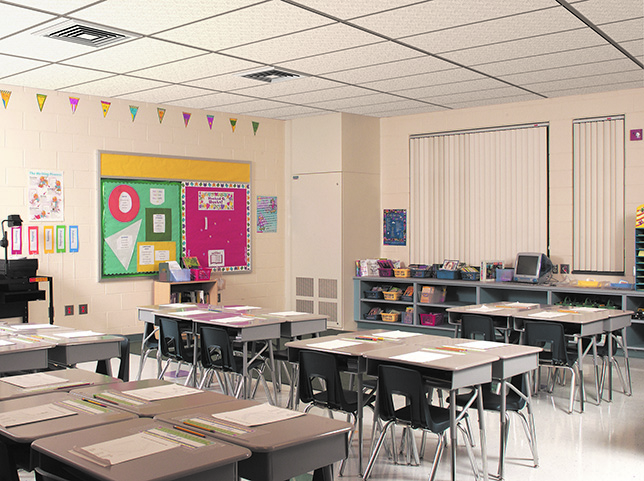
Image courtesy of Modine Manufacturing Company
Springtime Solutions to Improve IAQ
Mechanical HVAC systems have the ability to provide filtration and ventilation solutions to minimize the number of allergens in the air, as well as control the humidity level in a classroom. For optimal IAQ, single-packaged vertical units (SPVUs) are a good option. They are more efficient at combatting allergens and maintaining proper humidity levels because they are controlled on a single-room basis as opposed to the whole facility.
Another advantage that SPVUs have is temperature zone control. Temperatures vary from room to room, so it’s important to have individual room control. With zone controls, facility managers can warm or cool the rooms used the most at the time they are being used. In addition, they can heat or cool only occupied areas leading to significant cost savings over time.
The Airedale Sentinel® Vertical Unit Ventilator by Modine is a good example of an SPVU that provides the proper amount of fresh air ventilation. This type of HVAC unit is often simpler and more cost-effective to install and maintain than rooftop systems, making them a practical choice for schools looking to upgrade their HVAC infrastructure.
For smaller classrooms or where space is limited, installing units designed with a small footprint would provide the least disruption. The Airedale ClassMate® offers a smaller footprint, is designed with noise reduction and is easy to install.
Retrofitting to Combat Poor IAQ
As school budgets shrink and administrators still struggle with post-pandemic challenges, finding the funds to upgrade aging HVACs on a consistent basis may be difficult.
By offering solutions that improve ventilation at a cheaper cost than a replacement, retrofitting is a more affordable alternative. When compatible, adding air economizers can provide an efficient way to meet cooling demands and utilize less energy in the process. As the weather starts to warm up during spring, installing dehumidification controls would also be a good solution due to their ability to maintain comfortable relative humidity levels and provide improved IAQ.
Before considering any updates, school facility managers should make sure the HVAC unit can handle the additional components and added static. If the unit is too old or is not compatible, it can result in motors failing or less airflow, which can be problematic during warmer months.
Funding Options for Spring Upgrades
It’s no secret that at least half the schools in the U.S. alone are long overdue for substantial infrastructure upgrades. K–12 schools still have an opportunity to tackle some of their most pressing needs by tapping into an estimated $90 billion in unspent federal stimulus funding. The deadline for action is coming up sooner than later. Schools must request their funds by September 2024.
Kirk Rizzolla is the Sales Regional Manager for the IAQ division of Modine Manufacturing Company.