Preserving Legacy, Designing for the Future
- By Joe Echeverri, AIA, LEED AP BD+C, Kyle Peterson, MBA, AIA, LEED AP, DBIA
- 02/03/26
From grand facades immortalized on film to distinctive domes that guide generations of students across campus, historic academic buildings are more than just bricks and mortar — they are symbols of tradition, identity, and community. Classrooms echo with decades of discovery, while quads and courtyards hold the collective memory of countless conversations, milestones, and friendships. Yet as these spaces age, institutions face a difficult decision: preserve and adapt or demolish and rebuild. How do we honor the legacy of these spaces while adapting them to meet the needs of modern learners?
While new construction is often the attractive option, it can overlook the cultural, community, and long-term value embedded in historic structures. The challenge lies in balancing modern programmatic needs with the constraints — and opportunities — of existing buildings. When renovated, an existing building has tremendous potential to become a modern building where students can thrive. With the right team, strategy, and mindset a historic building can take on a whole new life.
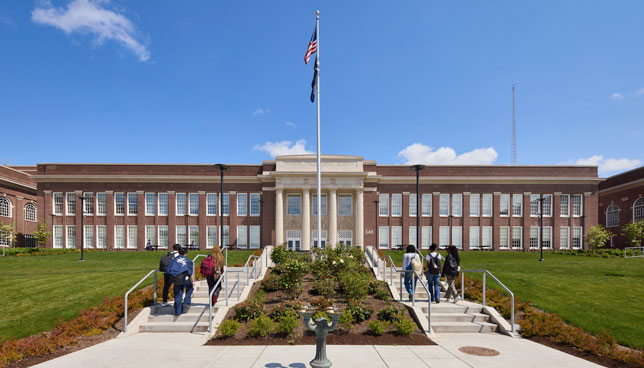 Portland Public Schools' Benson Polytechnic High School in Portland, OR (photo: Benjamin Benschneider, courtesy of HMC Architects)
When renovating Portland Public Schools' Benson Polytechnic High School, for example, we had to consider its historical significance and Portland Landmark status. Built in 1916, the school was funded by a $100,000 donation from local civic leader and philanthropist Simon Benson, and alumni have tremendous pride in their time at Benson. The project carefully restored the 1916 main classroom building, the 1917 foundry building, the 1927 gym, and the 1930 auditorium, pairing extensive façade repair with seismic, envelope, and roofing upgrades.
The school's transformative modernization reestablishes its legacy while reimagining its role as a dynamic, career-focused learning environment. With historic elements thoughtfully preserved and new academic spaces designed for hands-on learning, Benson stands as a beacon of possibility for public education and community revitalization for the next 100 years. Alumni have shared their love of the new design and comment that it cherished the most important things and brought them back to life and into the 21st century.
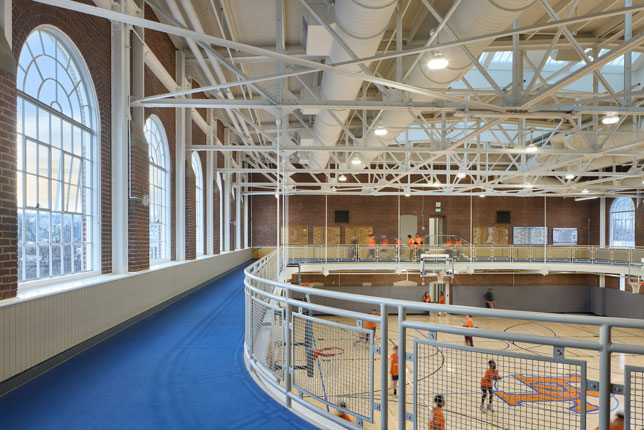 Portland Public Schools' Benson Polytechnic High School in Portland, OR (photo: Benjamin Benschneider, courtesy of HMC Architects)
Historic buildings are a key piece of a community's fabric and investing in historic structures can catalyze community revitalization, growth, and pride. With the right design team, regulatory navigation becomes manageable, and creative strategies can offset costs.
Best Practices Often Involve Thinking Outside of the Box
With effective collaboration, planning, and significant out-of-the-box thinking, teams can transform historic buildings into sustainable facilities that honor a campus's legacy and prepare students for the future. Here are lessons we have learned along the way.
Up-Front Communication Is Key
Start conversations with the client, regulatory agencies, and design teams early to unlock the most value and reduce delays and risk. A team of experienced partners and architects who understand preservation and adaptive reuse can help anticipate and resolve challenges. When historic review boards or landmark commissions are involved on a project, it is imperative to have team members who have navigated that process or served on such boards. Collaboration and an understanding of priorities up front reduce the risk of unexpected obstacles. By integrating feedback into the design from the start, teams can respond with greater flexibility and creativity, ultimately achieving outcomes that satisfy stakeholders.
In modernizing the Northrop Building at the Center for Deaf and Hard of Hearing Youth, a National Landmark building, the team met early and often with the state jurisdictional body to discuss strategies for preservation, as well as modifications that better suited the program. The team organized site walks with the plan reviewers and facilitated the process to create a memorandum of understanding that led to a successful approval. Not only did the design preserve the building's historic character-defining features, but it also met the unique needs of the user group with a well-crafted balance.
Prioritize Design Goals
Rehabilitation can appear more expensive up front, especially when structural upgrades are needed. But early collaboration can help to prioritize design needs and find ways to save money. Choosing to renovate an existing historic building, rather than tearing it down and building new, can not only be less expensive, but is also a more sustainable option. One of the highest carbon producers is concrete, and the majority of what we can salvage in an existing structure is the concrete bones, eliminating much of the up-front costs and impact to the environment.
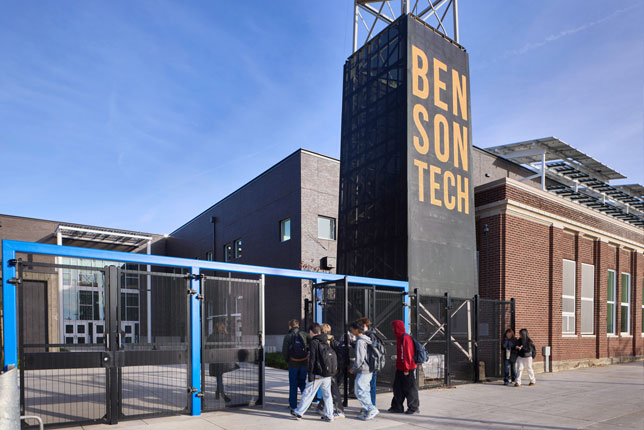 Portland Public Schools' Benson Polytechnic High School in Portland, OR (photo: Benjamin Benschneider, courtesy of HMC Architects)
Clients are seeing the sustainable value in renovation as well. In their 2012 facilities plan, Portland Public Schools recognized that reusing and renovating a building is more sustainable. They made it their goal, and formalized it within their district standards, to balance the potential savings of new construction with the embodied energy investment in existing buildings while also preserving the historic elements of the facility. Balancing energy savings and honoring the legacy of the building includes rehabilitating old windows for efficiency and aesthetics, using salvaged materials, and reusing irreplaceable historic features.
Do Your Research
Study precedents and visit similar projects, both locally and globally, to build vision and confidence. Without a successful precedent in mind, clients may struggle to imagine what's possible. As designers we not only look to our past projects, but also local historic buildings that are now hotels, theatres, or restaurants, and global landmarks like the Louvre or the Notre-Dame de Paris. These examples not only spark our imaginations, but they can also teach us and our clients valuable lessons.
Preserve Signature Features
Consider identifying the most signature features and highlight character-defining elements that can become focal points of the new design. Established in the heart of Beverly Hills, CA, in 1927, El Rodeo Elementary School is a testament to the delicate balance between heritage and progress. The historic modernization and seismic retrofit project sought to preserve the school's Spanish Renaissance Revival facades and iconic dome, ensuring that every detail remained untouched by time. The school's iconic dome needed to be upgraded to meet current seismic needs and keep students safe. But it was extremely valuable and irreplaceable. In order to upgrade the structure and restore the dome's glory, designers hand-etched a copy of each tile with carbon paper to ensure it matched perfectly and was replicated to exact design details. To the naked eye, the dome looks untouched and as pristine as it did in 1927.
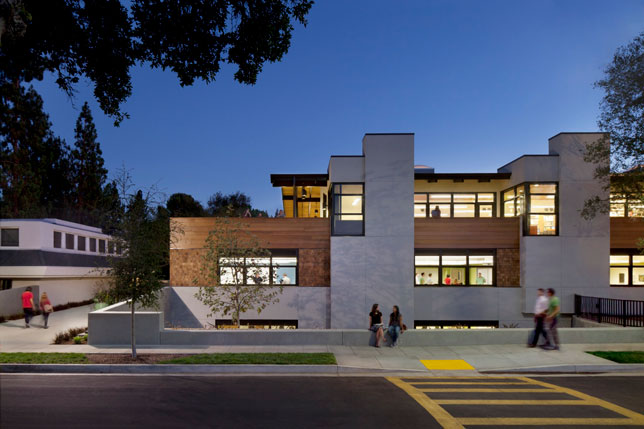 Polytechnic High School in Pasadena, CA (photo: Lawrence Anderson, courtesy of HMC Architects)
Find Creative Solutions
Renovating a historic structure to meet the needs of the future requires creative thinking. Polytechnic School in Pasadena, CA, has served Pasadena's students since 1907. In order to serve their growing enrollment and prepare students for the future, we relocated and rehabilitated historic structures atop a new subterranean parking structure, creatively meeting city mandates while enhancing campus character. Once the underground parking structure was complete, we placed the original buildings back on top of the parking structure and outfitted it as the school's new dining hall with modern commercial kitchen facilities and bright and open dining space. One of the buildings was not officially designated as historic, so we had a little more flexibility but the project still required a tremendous amount of creative thinking to maintain the building's legacy while serving today's students.
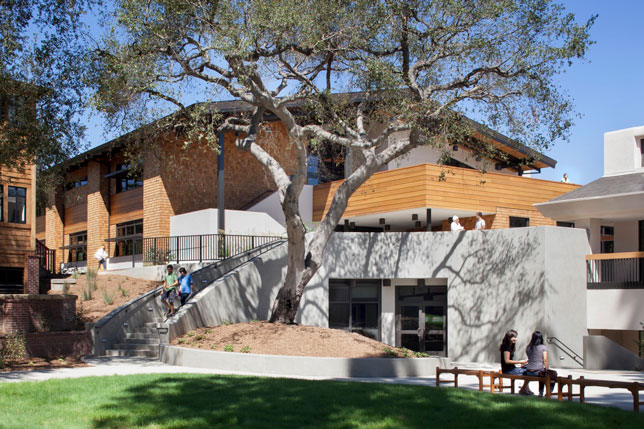 Polytechnic High School in Pasadena, CA (photo: Lawrence Anderson, courtesy of HMC Architects)
Lead with Vision
Preservation isn't just about saving the past — it's about shaping a richer, more inclusive future. One of the most fun and enjoyable moments of designing these historic facilities is salvaging historic elements and repurposing or reusing them in the building. For example, when we modernize a theater and replace old theater seats, we don't simply discard them. Instead, we might transform them into creative features — such as lighting fixtures or artistic installations in the lobby — allowing alumni to reconnect with the past. They may even spot the very seat where they once carved their name more than 50 years ago, preserving a tangible piece of character and history.
As a designer, it is incredibly exhilarating to partner with clients to renovate an older, historic building. It's a beautiful moment when we take a building from the transforming it into something that serves future generations. When clients approach historic buildings as assets, not obstacles, they have a chance to create one-of-a-kind environments that differentiate a project, attract visitors, and deepen community connection.