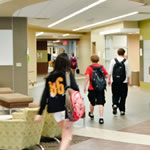
Cost-effective and efficient maintenance and housekeeping operations begin at the programming and design stages of residence hall construction projects.
Revitalized structures are a cornerstone of town-gown relations.
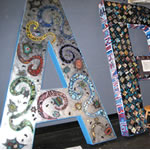
Art can proclaim a building's identity while promoting educational goals.
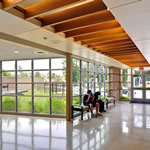
Success often comes from commitment to specialized yet flexible design.
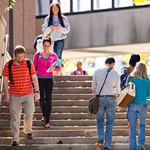
Cooperation between a college or university and the surrounding community leads to development, jobs, income and success for all. Here's why it matters -- for everyone.
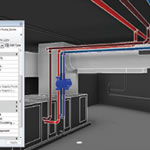
Something called Building Information Modeling offers a new and better way to manage maintenance.
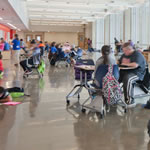
How do architects and designers know that they're creating schools with interiors that positively affect student performance?
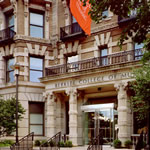
A sensible balance must be found when deciding how to renovate and repurpose historic campus structures to meet todays programming needs.
With the growth of private and charter schools it is clear parents are looking for choices. Districts are evolving their curriculum to include programs focused on S.T.E.M (science, technology, engineering and mathematics), the arts and language immersion

Hygiene and vandalism resistance rank as key concerns in today’s more collaborative K-12 restroom and locker room designs.
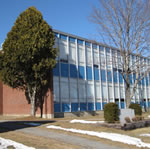
Turning a 60-year-old high school into a 21st-Century learning environment.
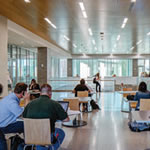
Collaborative learning involves teamwork, as does the designing of environments in which collaborative learning can thrive. Educational facility design experts know what works - and what doesn't - when it comes to creating collaborative spaces that allow for multiple uses and accommodate multiple learning styles. When creating collaborative spaces, keep the following in mind.
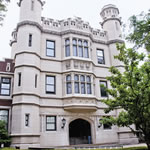
Keeping historically significant facilities weatherproof and energy-efficient while preserving architectural features takes care and planning.
Students with disabilities are in need of accommodations, but every student stands to benefit from the incorporation of design elements that address acoustical and visual access, as well as different learning styles and proper technology integration. Acce
Something old, something new? That may work great in weddings, but how about campus renovations? In constructing new buildings, assuring good indoor environmental quality (IEQ) is a basic consideration. But when it comes to renovating older facilities, special efforts must often be taken to apply modern standards in acoustics, daylighting, thermal comfort, and air quality.
Edison Technical High School was originally founded in 1906, just 21 years after Fresno, Calif., was incorporated as a city in 1885. Those who had originally traveled to central California in search of gold and adventure found the regions soil rich
The days in which a professor stands at the front of a huge room and simply delivers a lecture while students dutifully listen and take notes are disappearing. Todays students and educators demand far more interaction and flexibility. Thoughtful facility design can help colleges and universities meet these expectations.
The physical elements of the school building including scale, color and daylight are only a part of the picture, though. A successful design relies on engaging the people within the school community in a structured process. An early focus on smart plannin
Despite the fundraising challenge that confronts any two-year, private college, the ensuing capital campaign for Spartanburg Methodist College (SMC) proved successful and led to Ellis Hall being built and dedicated last November (2012). The facility was the first new academic building on the 110-acre campus since 1967. The 48,000-sq.-ft. building increased the College’s academic space from 15 to 29 percent of the total physical plant. SMC’s seven student residence halls account for most of the balance. SMC’s administration can focus next on upgrading existing buildings.
In 2010, the Institute for Workplace Innovation at the University of Kentucky developed the Innovative Workplace Model that identifies dimensions of dynamic work environments. Aimed at promoting communication, collaboration, creativity and innovation, the
While the nonstop, point-grabbing treasure hunt for Silver, Gold, or even Platinum certification has forced architects to get better at designing and creating more efficient structures, everything outside the building envelope has basically remained an afterthought. This narrow approach not only downplays the complex role a project’s site plays in its overall sustainability, it also ignores cultural and contextual considerations that are critically important to campus planning and design. Thankfully, there could be help on the horizon with the long-overdue introduction of the Sustainable Sites Initiative (SITES) into the certification game.
The $5.6M Gaillard Hall restoration/rehabilitation marks the final project in a $69.85M, two-phase public/private venture that included six additional new structures and a cadet formation plaza, all designed by LAS. Gaillard Hall and two of the new residential buildings — Patriot Hall and Liberty Hall — are organized around the formation plaza to create a military education precinct in the heart of the campus of what is now the University of North Georgia. Nestled in the foothills of the Appalachian Mountains, the University is one of only six senior military colleges in the U.S.
Creating schools that are the center of our communities is one of the key factors in creating 21st century schools. As an amenity for all ages, performing arts facilities are able to actively engage the larger community and accordingly, good planning and design will help ensure that the school and community both can reap the benefits of their investment in these facilities.
Traditional schools were designed when the primary mode of teaching was distributive; teachers provided information and students were responsible for memorizing and repeating the information. All classrooms were identical marching down each side of identical corridors.
Every decision we make has an impact on learning. We can guarantee that our students will have safe, secure, and nurturing places in which to learn by making informed decisions based on more than lowest cost. If you don’t have funding to do it all … add to the plus column by improving your educational environments one piece at a time.
Carrying on our beginning-of-the-year tradition, here is what we can look forward to during 2013, from the viewpoint of several people who dedicate their time and talents for the purpose of improving our education system in a variety of ways -- energy and
Flexibility involves planning and designing small, medium, large and extra-large spaces with useful connections and appropriate separations, robust infrastructure and movable furnishings that will support both current and future generations of learners.