Researching, selecting, planning, installing and using today’s high-tech security systems in schools can be a daunting process. Technology aside, there’s also the human dimension. That is, how best to work with consultants, faculty and staff as that process unfolds?

A look at the newer security technologies colleges and universities are considering and using on campus.
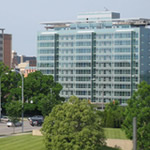
From BIM to energy-use monitoring, WiFi and more, existing buildings are being redesigned and outfitted to become technological standouts.

New school bus technologies are cutting costs, monitoring students, finding students for parents and more.
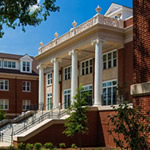
Important traditions live on in a new residence hall at the University of Georgia.
Integrated classroom controls can expand teaching options at the touch
of a well-placed button.
A strong case for virtualization in higher education.
With the growth of private and charter schools it is clear parents are looking for choices. Districts are evolving their curriculum to include programs focused on S.T.E.M (science, technology, engineering and mathematics), the arts and language immersion
Bridging the digital divide in rural schools.
Technology is modernizing the traditional instructional environment. The modern college student arrives on campus with more than just a suitcase in tow. An array of gadgets will also be on hand, including a tablet computer, a smartphone, an MP3 player, perhaps a laptop.

How flipping classrooms will alter classroom design, furnishings and technology to help students learn more.
Communication is key, especially during emergencies. Technology can help spread the word.
Technology can be used to enhance learning and prevent tragedy.
Today, in college classrooms, instead of the silence of students taking notes in notebooks, one may hear the soft tapping of laptop keys. Technology in the classroom has been evolving at a rapid rate, leaving teachers and students sometimes running to keep up. Multimedia technology, which specifically refers to technology related to audio and video, is no exception.
From projectors to iPads and iPod Touches, YouTube and teacher-created textbooks, multimedia lessons and the technology needed to run it are throughout New Braunfels Independent School District (ISD) in New Braunfels, Texas, from kindergarten
Sure, it’s easy to toss trash into the proper receptacles and to turn off the lights when leaving a room, but how does a university with thousands of personnel, administrators, and students on campus initiate a greener place to live, work, and study? Green initiatives for the higher education sector are everywhere, and there are so many ways that colleges can get involved, from implementing cleaner technologies that use less power consumption to offering vegan dining choices in the cafeteria to properly disposing of old, outdated printers.
In today's world, educational organizations are moving more and more to a hybrid model of the private and public cloud. Most corporations are at the same place; I am not aware of corporations placing their entire data operations out in the cloud.
Information technology is a highly dynamic, rapidly evolving sector. So are the risks and threats that surround it, and the functions it provides for our institutions. Effective risk management is essential.
What does “loud enough” mean in terms of a typical classroom? For the purposes of understanding classroom needs, we can begin with an interpretation. “Loud enough” is an attempt to describe the volume of one signal in comparison to others. This effectively means that whatever is being listened to (i.e., the signal) should be louder than the “noise” in the room.
Many smaller liberal arts institutions don’t even have secondary server rooms as backups. If an earthquake or flood destroys the single primary server room on campus, an institution won’t be able to issue paychecks or deposit tuition payments. New students won’t be able to register. All of the data stored in the learning management system will be inaccessible to students as well as professors. School may well be over for the year. Because the results can be so dire, more and more schools are building secondary server rooms for disaster backup.
Virtually everything a typical student would need to do could be done using a web browser. The number of student learning activities requiring a full blown computer with local applications is few and far between, concentrating more in the high school grad