New Vehicles Aid in Safety and Sustainability Efforts
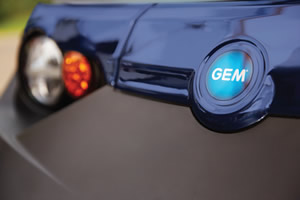
Being able to perform for eight hours or more on a single charge is just one of the many ways in which the GEM car promotes sustainability at Penn State University Park’s campus.
On Pennsylvania State University Park’s vast campus, Polaris GEM cars are transporting passengers, hauling equipment and assisting with landscape management. With sustainable power sources, street legal status and small vehicle footprints, GEM vehicles are providing the perfect solution for Penn State’s transportation and maintenance needs.
A priority for the purchase was selecting a vehicle that could perform a minimum of eight hours on a single charge. GEM’s battery options provide Penn State the ability to choose a battery system that does just that, without time wasted to recharge.
In addition to battery life, GEM provides options and features comparable to a full size truck. The street-legal status of GEM eliminates the necessity of driving utility vehicles on sidewalks, enhancing safety for pedestrians on campus.
Bruce Cifelli, Equipment Management and Services administrator at Penn State, notes, “With more on-road vehicle systems, GEM is a strong performer.” In addition to GEM’s high quality compared to conventional trucks, its compact size sets it apart, allowing easy maneuverability between buildings and on pathways where large trucks simply can’t go.
In the business of campus maintenance, time is money. Vehicles must be at peak performance to maintain efficiency and get the work done. Cifelli notes, “We’ve seen much less maintenance on these vehicles. That means less down time.” The time and cost savings go directly to the bottom line, making electric vehicles the perfect addition to a utility fleet.
When purchasing a utility vehicle, electric options have long been overlooked because of concerns about reduced capacity. GEM is a testament to the power of an electric option. With long-range batteries, regenerative braking, payload and towing capacities and automotive style suspension, GEM accomplishes what a utility vehicle should in places a truck can’t.
www.polaris.com
This article originally appeared in the issue of .