A Proactive Approach
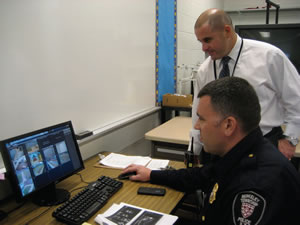
PHOTO BY SCOTT BERMAN
“We saw the towers go down,” remembers Dr. James Roselli about 9/11. On that awful day in 2001, he was vice principal of a middle school in Bloomfield, N. J., within sight of the Manhattan skyline.
For sure, 9/11, as well as incidents at schools in the U.S. over the years, has changed perceptions and driven safety and security efforts in many ways. And it’s been the case at Roselli’s current district, in Berkeley Township, N.J., a small K-6 system near the Jersey shore, which he joined in 2002, later becoming superintendent.
That district has made security and safety measures telling of changes at many districts across the country — changes sometimes spurred by government mandate or recommendations, and other times by local incidents, but always by new awareness of the realities of today’s school safety and security risks. And with Berkeley Township, add the impact of Superstorm Sandy, which hit the community in 2012.
Roselli and Dr. Jeffery Zito, coordinator for security for the district and principal of its H&M Potter School, describe many steps taken in recent years to School Planning & Management, including a security audit, a district survey and forum, constructing secure entry vestibules, revamping entry procedures and protocols for evening events at schools, and diverse participation in safety and security efforts. For sure, many steps are not unusual, and some are state mandated for all districts in New Jersey — various districts across the state have taken steps that Berkeley Township has, such as police in schools, hardening entrances and installing cameras.
Yet Roselli’s especially proactive efforts have earned him an exemplary school safety award from the School Safety Advocacy Council (SSAC) in 2013. SSAC Executive Director Curtis Lavarello says Roselli’s work is all about “well-rounded community collaboration. We’ve worked with a number of districts and it’s not a given that districts reach outside to, for example, parents and law enforcement to serve on safety committees, and to be part of the collaboration.” Roselli, on the other hand, “opened up the doors,” to make changes, Lavarello adds.
Opening up doors means plenty of community participation — local parents, police and fire regularly join faculty, administration, buildings and grounds, business administration staff members at regular safety committee meetings, which Zitto described as productive brainstorming roundtables.
In another key step, Roselli hammered out an agreement with the local mayor and police union: a reduced side-job rate — $30, down from the normal $70 — for four armed officers who, when off duty, patrol the schools for seven hours a day. In another initiative, the district offsets some of the expense, which totals $150,000 annually, by offering a paid pre-school program in available space. “We tend to be asked by other districts, `How did you get the police? How did you get that deal?´” says Roselli, “Well, we sat down and we communicated.” Incidentally, most parents who were surveyed on the move said that they would be more comfortable with officers in the schools.
After the forum and survey, the district brought in Seraph to conduct a $17,000 security audit, which was one of the requirements for applicants to go on and apply for a state grant to build on local efforts, in this case to hire four additional local police officers, one for each school, on a five-year contract, says Roselli. The district has applied for the grant, which would provide $150,000 a year, and expects to get word in June 2014, he says.
The district’s approach and results were evident at its Clara B. Worth Elementary School, where a police car was parked alongside the building, exterior cameras were in view and viewing, and we entered into the state-advocated access-control vestibule, which had been built into existing space, Roselli explains. Among the features: doors with buzzers and requiring smart swipe cards — swipe access is keyed to work hours — conspicuous interior cameras, tempered glass and panic buttons. Elsewhere in the building, the nurse’s office has its own secure entrance.
In the vestibule, friendly, alert staff members behind the glass engage visitors, who must sign in. The school’s police officer, Brian Wormer, stops by a moment later. Principal Daniel Prima is on hand, too, and he’s quick to say, “We love having a police officer in the building. It’s a bonus.” Police officers in each district school walk the perimeter of each district school, checking everything from windows and doors to garbage cans.
There’s more, of course: police monitor 100 interior and exterior cameras set up at the district’s four schools and other buildings — the system is integrated, including with the swipe card system, so each officer can check up on the other school locations, and the system is linked to local police.
Prima also makes a telling point about school security anywhere: It’s an ongoing dialogue. He adds: “We talk about what we need, what we hear, and what’s coming down the pike” in terms of any new requirements, adding that for many reasons, “security is a dynamic thing.”
Dynamic indeed. Dynamic things change constantly, and not only coping, but also succeeding, in such circumstances requires vigilance. As Roselli adds, “We don’t ever want to get complacent, because we can’t afford to be. Unfortunately, this is the new normal.”
Suggested ways to implement school safety
Phase in changes with plenty of outreach, listening and communication. And do so equally across schools, says Berkeley Township district’s James Roselli.
“Start small and get bigger” when assessing needs, as Berkeley Township district’s Jeffery Zito says, “Begin the process in-house, talking with the people who are there all of the time” such as custodians, teachers and staff.
Be conspicuous! Be present, whether it’s staff or faculty outside or inside your school, wearing i.d. badges, or having a police car parked in a visible location.
See and be seen. Get around and look around.
Think outside of the box, says Roselli. Think thoroughly and cooperatively about ways to generate revenue for needed security and safety measures. Declining enrollment? Then you may have space that could be rented out by another district, or for a preschool program, to take just two possibilities.
Can’t afford a safety asset? Start by having administrators switch schools and do walk-throughs. It brings a fresh set of eyes to your campus. Or, have 10 youngsters fan out and look for simple vulnerabilities and report back. Engaging your youth is crucial.
This article originally appeared in the issue of .